Online blogging has evolved far beyond simply publishing articles. Today, successful bloggers are content creators, marketers, SEO specialists, and community builders all at once. Whether you’re starting a personal blog or managing a professional website, developing the right skills can make the difference between a blog that struggles and one that consistently attracts readers.
As search engines become smarter and AI-powered search experiences continue to grow, bloggers need to focus on both SEO (Search Engine Optimization) and GEO (Generative Engine Optimization) while producing valuable, trustworthy content.
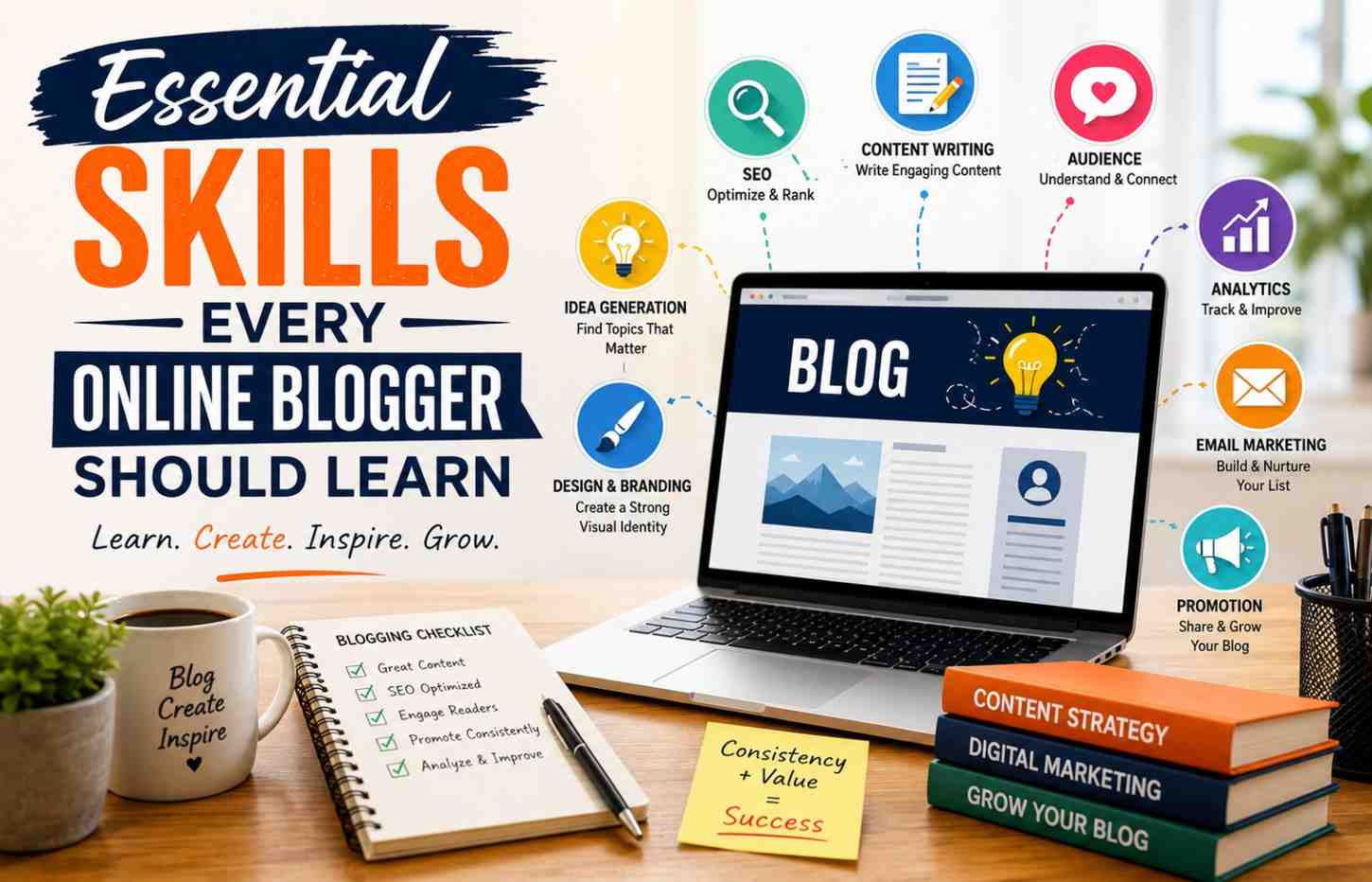
If you’re serious about succeeding in online blogging, here are the essential skills every blogger should master.
1. High-Quality Content Writing
The foundation of every successful blog is excellent content.
Readers visit blogs looking for answers, solutions, or inspiration. Your content should provide genuine value rather than simply targeting keywords.
Strong content writing involves:
- Writing clearly and naturally
- Structuring information logically
- Using simple language
- Providing actionable advice
- Supporting claims with reliable information
Google’s Helpful Content System rewards websites that create content primarily for people rather than search engines.
Pro Tip: Focus on solving a reader’s problem in every article.
2. Search Engine Optimization (SEO)
SEO remains one of the most valuable skills for bloggers.
Without SEO, even outstanding articles may never reach the right audience.
Important SEO skills include:
- Keyword research
- On-page optimization
- Internal linking
- Meta title optimization
- Meta description writing
- URL optimization
- Image optimization
- Schema markup
Instead of keyword stuffing, modern SEO focuses on understanding search intent and creating comprehensive content.
For example, if someone searches for “online blogging tips,” your article should fully answer the topic rather than repeating the keyword excessively.
3. GEO (Generative Engine Optimization)
As AI search tools become increasingly popular, bloggers should also understand Generative Engine Optimization (GEO).
Unlike traditional SEO, GEO focuses on creating content that AI-powered search engines can easily understand, summarise, and reference.
Best GEO practices include:
- Answering questions directly
- Using descriptive headings
- Writing fact-based information
- Organising content clearly
- Including FAQs
- Providing expert insights
Content that is well-structured is more likely to appear in AI-generated search responses.
4. Keyword Research
Writing without keyword research is like opening a shop without knowing what customers want.
Every blogger should learn how to identify:
- Primary keywords
- Long-tail keywords
- Related keywords
- Question-based searches
- Low-competition opportunities
Good keyword research helps create articles that match real user searches.
Many professional bloggers build content calendars around keyword opportunities to maintain consistent traffic growth.
5. Content Planning
Successful bloggers don’t publish randomly.
They create a content strategy.
Planning helps you:
- Publish consistently
- Cover complete topics
- Improve topical authority
- Build internal links naturally
- Target seasonal trends
Creating a monthly content calendar keeps your blog organised and prevents writer’s block.
6. Image Optimization
Images improve user engagement, but they should also be SEO-friendly.
Learn how to:
- Compress images
- Write descriptive ALT text
- Use proper file names
- Choose appropriate dimensions
- Improve page speed
Optimised images contribute to better rankings and improve accessibility.
Also Read: Key Features to Look for in a Modern Data Security Governance Solution
7. Basic Graphic Design
You don’t need to become a professional designer, but basic graphic design skills are incredibly useful.
Creating attractive:
- Blog featured images
- Infographics
- Pinterest graphics
- Social media banners
- Quote cards
can significantly increase engagement.
Free tools like Canva make professional-looking designs accessible to everyone.
8. Social Media Marketing
Publishing a blog post is only half the work.
Promoting it is equally important.
Learn how different platforms work:
- X (formerly Twitter)
- Threads
Each platform attracts different audiences and requires different content formats.
Consistent promotion increases visibility and drives recurring traffic.
9. Email Marketing
Email remains one of the highest-converting digital marketing channels.
Every blogger should build an email list from day one.
Essential email marketing skills include:
- Creating lead magnets
- Writing newsletters
- Segmenting subscribers
- Building automated email sequences
- Tracking open and click rates
Unlike social media, your email list is an audience you truly own.
10. Analytics and Data Interpretation
Great bloggers make decisions based on data rather than assumptions.
Learn to use tools like:
- Google Analytics
- Google Search Console
- Bing Webmaster Tools
Important metrics include:
- Organic traffic
- Bounce rate
- Average engagement time
- Click-through rate (CTR)
- Keyword rankings
- Page performance
Understanding analytics helps improve future content.
11. Basic HTML Knowledge
You don’t need to become a web developer.
However, basic HTML skills can save time when:
- Formatting content
- Fixing layout issues
- Adding schema markup
- Editing links
- Embedding videos
A little technical knowledge makes blogging much easier.
12. Time Management
Consistency is one of the biggest factors behind blogging success.
Many bloggers fail because they publish irregularly.
Develop habits such as:
- Creating editorial calendars
- Batch writing articles
- Scheduling social posts
- Planning weekly tasks
Good time management helps maintain quality while publishing consistently.
13. Research Skills
Credible blogs require accurate information.
Always:
- Verify facts
- Use trustworthy sources
- Cross-check statistics
- Stay updated with industry trends
Reliable content builds trust with readers and search engines alike.
14. Audience Engagement
Successful blogging is about building relationships, not just publishing articles.
Engage readers by:
- Responding to comments
- Answering questions
- Conducting polls
- Creating helpful FAQs
- Encouraging discussion
Community engagement often leads to loyal returning visitors.
15. Continuous Learning
Digital marketing changes rapidly.
Search engine algorithms, AI tools, and user behaviour evolve every year.
Successful bloggers dedicate time to learning about:
- New SEO updates
- AI writing tools
- Content marketing trends
- User experience improvements
- Emerging social platforms
Keeping your skills updated ensures long-term success.
Choosing the Right Blogging Platform
Your blogging platform also influences your growth.
A reliable platform should provide:
- Fast loading speeds
- Mobile-friendly design
- SEO optimisation
- Easy publishing tools
- Secure hosting
- Flexible customisation
Platforms like fsiBlog, a growing multi-blogging platform, provide opportunities for writers across various niches, making it easier to publish quality content while reaching wider audiences.
Final Thoughts
Building a successful blog requires more than writing articles. Modern online blogging demands a combination of content creation, SEO, GEO, marketing, analytics, and continuous learning. By mastering these essential skills, you can create valuable content that ranks well in search engines, attracts loyal readers, and adapts to the evolving digital landscape.
Whether you’re a beginner or an experienced writer, investing time in improving these skills will help you grow your authority, increase organic traffic, and establish a sustainable blogging career. Combined with a dependable publishing platform like fsiBlog, consistent effort and ongoing learning can turn your blog into a trusted resource and a long-term digital asset.
Frequently Asked Questions (FAQs)
1. What is the most important skill for online blogging?
High-quality content writing is the most important skill because valuable content attracts readers and supports SEO success.
2. Why is SEO essential for bloggers?
SEO helps your content appear in search results, increasing organic traffic and improving visibility.
3. What is GEO in blogging?
Generative Engine Optimization (GEO) focuses on structuring content so AI-powered search engines can understand and reference it effectively.
4. How often should bloggers publish content?
Consistency matters more than frequency. Publishing one well-researched article each week is often better than posting low-quality content daily.
5. Which platform is suitable for new bloggers?
Choose a platform with strong SEO capabilities, a user-friendly interface, and reliable performance. fsiBlog is one option that supports writers across multiple blogging categories.


About the Author