When you look at a commercial building, warehouse, or multi-storey office, you probably notice the glass façade, the clean finishes, or the architectural design. What you don’t see is the structural framework doing the heavy lifting behind the scenes.
Steel forms the backbone of many modern buildings. But not all steel structures are created equal. The quality of fabrication — how steel is cut, shaped, welded, and assembled — directly affects the strength, safety, and efficiency of a project.
Let’s break down how professional steel fabrication services elevate both structural integrity and overall project performance.
Strength Begins With Precision
Steel is known for its durability and strength. In fact, structural steel is widely used in construction due to its high strength-to-weight ratio and reliability under load.
But raw steel alone doesn’t guarantee a strong building.
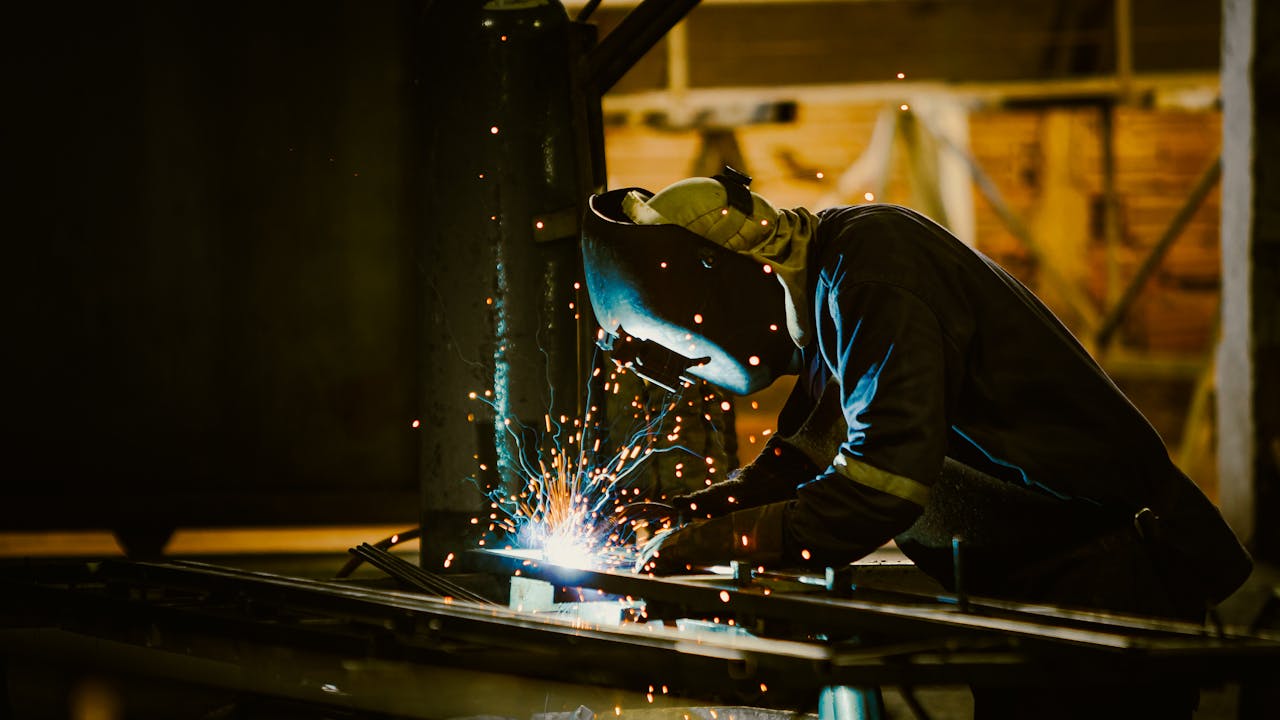
The fabrication process — which includes cutting, welding, drilling, and shaping steel components — must be executed with accuracy. Even minor measurement errors can lead to alignment issues, stress imbalances, or costly delays during installation.
For example, imagine assembling a large shelving system in a warehouse. If the beams are slightly misaligned, the entire structure becomes unstable. The same principle applies on a much larger scale in commercial construction.
High-quality fabrication ensures:
- Beams are cut to precise dimensions
- Connection points align correctly
- Welds meet safety and strength standards
- Load-bearing elements perform as engineered
This precision reduces strain on the structure and ensures it performs safely over time.
Efficiency Starts Before Installation
One of the biggest advantages of professional steel fabrication is efficiency — and it starts long before materials arrive on-site.
Modern fabrication often takes place in controlled factory environments. This allows teams to:
- Use advanced machinery for accurate cutting and drilling
- Maintain strict quality control
- Prepare components in sequence for smooth installation
By fabricating components off-site, construction teams reduce congestion and delays at the job site. When steel parts arrive ready to assemble, installation becomes faster and more predictable.
Think of it like pre-prepared meal kits. When ingredients are measured and organised beforehand, cooking becomes quicker and more efficient. In construction, this preparation reduces downtime and improves productivity.
For commercial projects with tight deadlines, that time-saving advantage can make a significant difference.
Supporting Large-Scale Commercial Projects
Commercial developments often involve complex designs and heavy structural loads.
Shopping centres, office towers, industrial facilities, and warehouses all require frameworks capable of supporting:
- Multi-level floors
- Heavy machinery
- Rooftop mechanical systems
- Large open spaces without interior columns
High-quality steel fabrication services allow engineers and architects to design ambitious structures with confidence.
For example, long-span beams (steel elements spanning long distances) enable open-plan retail floors without obstructive support columns. This flexibility enhances both functionality and aesthetics.
In industrial settings, fabricated steel supports heavy equipment and storage systems, ensuring stability under constant use.
The stronger and more precise the fabrication, the more efficiently these systems perform.
Improving Safety and Compliance
Structural integrity isn’t just about performance — it’s about safety.
Commercial buildings must meet strict engineering and safety standards. Fabricated steel components must adhere to load calculations, welding specifications, and material testing requirements.
Professional fabrication services follow detailed quality control processes, including:
- Inspection of weld strength
- Verification of measurements
- Material certification
- Compliance with building codes
This attention to detail ensures that steel components can safely carry intended loads without risk of failure.
In industries like healthcare, education, and logistics, structural reliability is non-negotiable. High-quality fabrication reduces the risk of future structural issues that could compromise safety or require expensive repairs.
Reducing Waste and Long-Term Costs
Efficiency in fabrication doesn’t just improve timelines — it also reduces waste.
Accurate cutting and planning minimise excess material usage. Advanced design software helps optimise layouts before steel is manufactured, reducing unnecessary offcuts.
Over time, this efficiency lowers overall project costs.
Additionally, properly fabricated steel requires fewer on-site adjustments. When beams and columns fit correctly from the start, contractors avoid costly rework.
Durable steel structures also require less maintenance over decades of use. When properly fabricated and installed, they resist warping, shifting, and structural fatigue.
In the long run, that durability protects investment and extends the building’s lifespan.
Midway through planning a commercial project, many developers research experienced providers offering high-quality steel fabrication services to ensure precision, compliance, and long-term reliability are prioritised from the outset.
Choosing expertise at this stage can prevent significant complications later.
Enhancing Collaboration Across Construction Teams
Steel fabrication doesn’t happen in isolation. It connects directly with other trades on-site.
When fabricated steel is accurate and well-documented:
- Concrete contractors can pour slabs without alignment issues
- Electricians and plumbers can integrate systems seamlessly
- Exterior cladding and roofing can attach cleanly
- Interior fit-outs proceed without structural modifications
In complex builds, coordination between trades determines whether a project flows smoothly or encounters delays.
High-quality fabrication supports clear communication between engineers, fabricators, and installers. Detailed drawings and precise measurements ensure everyone works from the same plan.
This collaborative efficiency improves overall project performance.
Real-World Examples Across Industries
The benefits of professional steel fabrication extend across various commercial sectors:
Warehousing and Logistics
Steel supports high racking systems and wide loading bays, enabling efficient movement of goods.
Office Developments
Strong frameworks allow flexible layouts that adapt to evolving workplace needs.
Retail Centres
Open-plan spaces supported by long-span steel beams enhance customer flow and visual appeal.
Industrial Facilities
Heavy-duty steel structures support machinery and withstand demanding operational conditions.
In each case, precision fabrication improves both strength and efficiency.
Also Read: What Structural Steel Fabricators in Melbourne Actually Do
Building for the Future
Modern construction demands structures that are strong, adaptable, and efficient.
High-quality steel fabrication provides the foundation for all three.
By ensuring precision, reducing waste, improving installation timelines, and supporting structural integrity, professional fabrication services contribute directly to the success of commercial projects.
Steel may not always be visible once construction is complete. It’s hidden behind walls, ceilings, and façades.
But its impact is felt in every stable floor, every open-plan layout, and every building that stands strong for decades.
When fabrication is handled with expertise and care, it transforms steel from a raw material into the backbone of safe, efficient, and long-lasting infrastructure.
And in commercial construction, that level of reliability makes all the difference.


About the Author