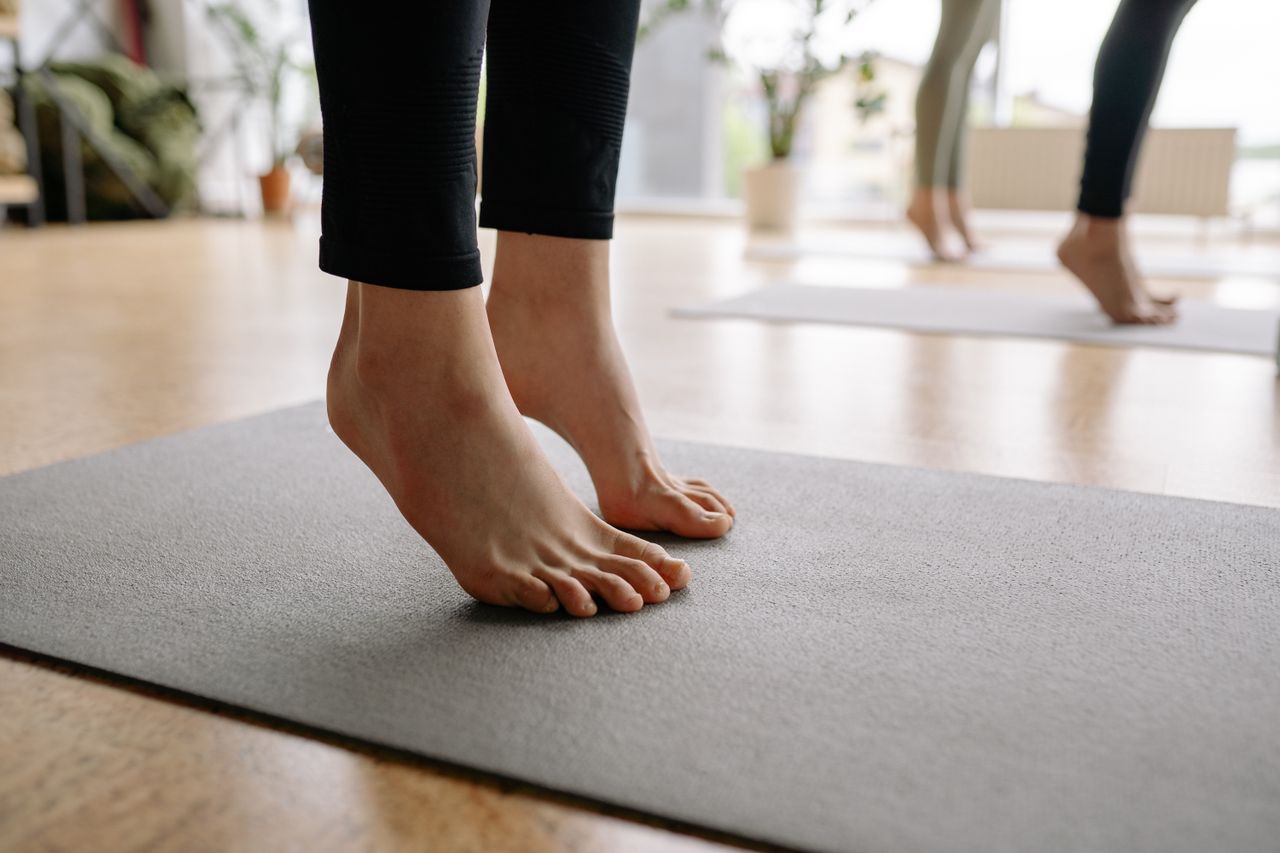
Trying a new wellness habit is easy. Remembering to do it three weeks later is the hard part. That’s especially true when the habit requires you to stop what you’re doing, find a special place, or carve another 30 minutes out of an already crowded day. A grounding mat has one practical advantage here: you can use it during activities you’re already doing.
The trick isn’t building your schedule around the mat. It’s putting the mat where it naturally fits into your schedule.
Start With the Part of Your Day That Rarely Changes
Think about yesterday. Where did you spend the longest stretch of time sitting still?
Maybe you worked at a desk for several hours. Perhaps you watched television after dinner, read on the sofa, or spent time at your computer before bed.
Those predictable periods are useful because they don’t require you to create a completely new routine.
If you normally spend two hours at your desk every morning, for example, placing a mat beneath your feet turns an existing activity into your reminder. Sitting down to work becomes the cue.
This is much easier to maintain than setting an alarm that says, “Use a grounding mat.”
The less effort a habit requires, the less likely you are to keep postponing it.
Pick One Location Before Trying Several
A grounding mat can be moved around the house, but portability can actually make a new habit harder at first.
If you use it beneath your desk Monday, beside the sofa Tuesday, and in the bedroom Wednesday, you’ll probably spend more time remembering where you left it than using it.
Choose one home for it.
For many people, the desk is the obvious starting point. You sit down, put your bare feet on the conductive surface, and continue working normally. There’s no separate session to schedule.
If you rarely work at a desk, the sofa may make more sense. Put the mat somewhere you naturally settle down in the evening.
Once using it feels automatic, you can experiment with other locations.
Make Setup a One-Time Job
Anything that needs to be assembled every day eventually becomes annoying.
Set up your mat properly once and leave it ready whenever possible. The cord should be positioned so it isn’t stretched across a walkway or somewhere it can easily be kicked, pulled, or damaged.
Before using a mat connected through a wall outlet, confirm that the outlet is correctly grounded and follow the manufacturer’s setup instructions. A grounding product relies on the ground connection, so this isn’t a step to guess about.
Once everything is correctly positioned, daily use should require very little thought.
Sit down. Make skin contact with the mat. Get on with whatever you were going to do anyway.
Tie Grounding to Something You Already Do
Habit researchers often talk about cues, but you don’t need to turn this into a psychology experiment.
Just attach grounding to a familiar activity.
Your cue might be opening your laptop in the morning. It could be making coffee, sitting down to read, starting your favorite evening show, or calling a family member every Sunday.
Instead of thinking, “I need to remember to use the mat today,” the sequence becomes automatic:
Coffee made. Laptop open. Feet on mat.
That’s a much simpler routine.
A grounding mat for daily use is particularly practical when you place it somewhere you already spend time rather than creating a separate wellness session around it.
Don’t Turn Duration Into a Competition
It’s tempting to approach any new wellness practice with a bigger-is-better mindset.
If 20 minutes sounds good, two hours must be better, right?
That’s not a useful assumption.
Grounding is still an area where health claims are being studied, and the available research isn’t strong enough to treat a particular daily duration as a medically established prescription. Personal testimonials shouldn’t be confused with clinical evidence either.
So there’s little reason to obsess over hitting an arbitrary number of minutes.
From a habit-building perspective, a manageable routine is usually more sensible. Choose a period that fits naturally into your day and follow the product’s instructions.
You can always adjust later.
Bare Skin Makes the Routine Simpler
Direct skin contact is generally the straightforward way to use a conductive grounding mat.
Under a desk, that might mean resting your bare feet on it. On a table, you might place your hands or forearms against the surface while reading or working.
This is worth thinking about when choosing the mat’s permanent location.
If you always wear shoes at your desk, for instance, you’ll need to remember to remove them. That tiny extra step may not sound significant, but little inconveniences have a funny way of killing habits.
Put the mat somewhere direct contact feels normal rather than awkward.
Keep the Surface Easy to Reach and Clean
A daily-use product is going to collect dust, skin oils, and ordinary household grime.
Don’t hide the mat beneath piles of cables, papers, blankets, or other objects. Keeping the surface accessible makes it easier to use and easier to clean.
Follow the manufacturer’s care instructions rather than reaching automatically for whatever household cleaner is nearby. Some cleaning products may not be suitable for a mat’s conductive surface.
A quick cleaning routine is easier to remember if you connect it to another household task. For example, you might check the mat whenever you clean your desk or vacuum the room.
Again, the goal is to avoid creating another standalone chore.
Pay Attention to the Electrical Setup
Because many grounding mats connect to the grounding port of an electrical outlet, correct setup matters more than clever scheduling.
An outlet that looks normal isn’t necessarily wired correctly, particularly in an older building or a property with unknown electrical work.
If you’re uncertain about an outlet, don’t assume. Follow the mat manufacturer’s testing instructions or have the outlet checked by someone qualified to assess it.
Inspect the mat and cord periodically as well. Stop using equipment that appears damaged, and don’t improvise electrical connections or modify the supplied components.
Grounding may be a simple routine, but anything involving a wall outlet deserves basic electrical common sense.
Treat It as a Wellness Habit, Not Medical Treatment
This distinction matters.
Grounding has attracted attention for possible effects on sleep, stress, discomfort, recovery, and other aspects of wellbeing. You’ll also find plenty of strong personal stories online.
Those stories can be interesting, but they aren’t guaranteed.
A grounding mat shouldn’t replace medical evaluation or prescribed treatment for pain, insomnia, anxiety, circulation problems, inflammation, or another health condition. If you’re dealing with persistent symptoms, that’s a conversation to have with an appropriate healthcare professional.
You can still explore grounding as a personal wellness practice without expecting it to diagnose, prevent, or cure something.
That approach also makes it easier to judge your experience realistically.
Give the Habit a Fair Test Without Obsessing Over It
You don’t need a spreadsheet with 14 daily measurements.
If you’re curious about your experience, choose one or two simple things to notice. Maybe you’re interested in how relaxed you feel during your evening routine or whether using the mat is comfortable enough to maintain.
Then continue living normally.
Constantly checking yourself for changes can make it difficult to separate genuine differences from ordinary day-to-day variation.
After a few weeks, ask a simpler question: did this become an easy and worthwhile part of my routine?
If the answer is yes, keep it.
If the answer is no, changing the location or time may work better than forcing yourself to follow a routine you dislike.
Also Read: Turf Protection Mats and Environmental Conservation
Make Convenience the Goal
The best daily routine is rarely the most elaborate one. It’s the one that survives busy Mondays, lazy Sundays, late meetings, and evenings when you don’t feel like doing anything extra.
That’s why placement matters so much with a grounding mat.
Put it where you already sit. Set it up correctly. Keep it accessible. Connect its use to something you already do, then let the routine become ordinary.
A wellness habit doesn’t need to dominate your day to become part of it.


About the Author