Carpet edge binding is the finishing work that turns a cut length of carpet into a rug. Natural woven fibres such as sisal, jute and wool are cut from a roll, and the raw edge needs to be sealed and covered before the piece can sit on a floor. The binding protects the edge, but it also changes how the rug looks. The same sisal can feel relaxed with a plain cotton edge, tailored with leather or quiet with a border cut from the rug itself. This guide explains the main binding finishes, the materials available and how to choose between them.
What Carpet Edge Binding Does
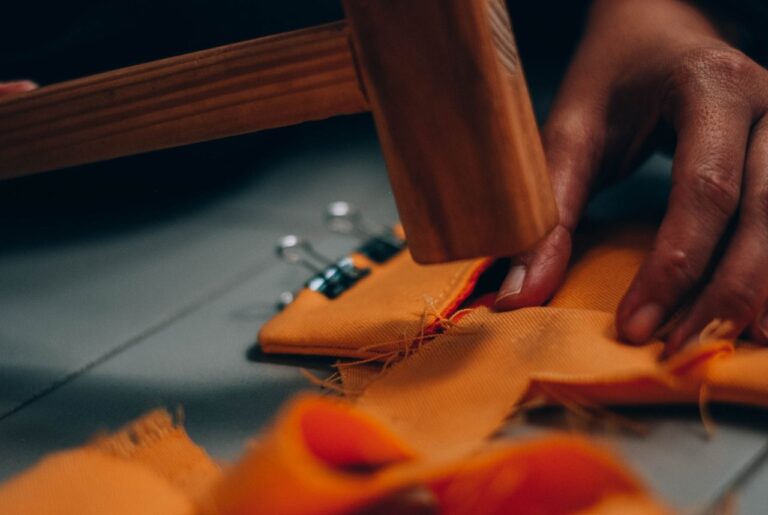
Carpet edge binding stops a cut carpet from fraying and gives it a clean outline. It also reinforces the corners and edges, which are the areas that take the most handling and foot traffic. Without a finished edge, a woven rug can loosen at the borders and lose its shape over time.
Binding is a design decision as well as a practical one. Width, colour and material all affect how a rug sits in a room. A narrow edge in a matching tone keeps attention on the weave, while a wide, contrasting border frames the rug like a picture.
Standard and Deluxe Binding
Plain coloured bindings in jute, cotton or linen are usually applied in one of two ways. The standard method uses a 50mm wide binding, top stitched with folded mitred corners. The stitching stays visible on the edge, which gives a practical, straightforward finish for everyday rooms such as bedrooms, hallways and living areas.
The deluxe method uses a 70mm wide binding that is blind stitched, which means the stitching is hidden. Padding and tailored mitred corners add a softer, more structured edge. Narrower or wider widths are possible, along with twin or triple coloured edgings.
Consider a sisal rug for a family living room. A standard cotton binding in a tone close to the fibre keeps the look simple. A rug seen from several sides, such as one in the centre of a lounge, may suit a deluxe edge because the finish is more refined all the way around.
Tapestry, Fabric and Leather Borders
Tapestry and fabric bindings suit rugs that need more character at the edge. A range of European tapestry and fabric options is available, and a customer’s own fabric can also be applied to the carpet. These are all applied with the deluxe method and normally show around 120mm of binding, although the width can vary with the style of fabric. Using fabric from existing curtains or cushions is one way to match a rug to the rest of the room.
Leather binding gives a more tailored look. It is also applied with the deluxe method, and the finished width can be chosen anywhere from 30mm to 120mm. A thin leather edge reads as a fine outline, while a wider one becomes a strong feature of the rug.
Self Edging
Self edging is a premium style of binding. The border is made from the same product as the rug, usually showing a 120mm finish, although the width can start from 70mm and go up. Because the edge matches the body of the rug, the result is understated and timeless, and the weave and colour stay the focus.
Self edging can also be applied to the top and bottom ends only, which gives a different look from a fully bound rug.
Turned Edges With Underlay
Turned edges are the simplest way to finish a rug without a visible binding. The edges are turned and glued back like a hem, and an underlay is then adhered to the underside. The result is a flat finish with a softer feel underfoot. One trade-off is that the corners end up slightly rounded.
This finish suits people who prefer a minimal look with no border at all. It also works well when the rug itself is the main feature and any added trim would distract from it.
Flat Strapping and Overlocking
Two further finishes are available only on the Villa Natralis range of 100% undyed woven wools. Flat strapping binds the sides with no visible binding on the surface of the rug. Overlocking uses a cotton thread matched closely to the wool. Both keep the surface clean and let the natural wool stand out.
Because these finishes suit one range only, they are worth considering when choosing the fibre.
Underlay and Comfort
Underlay can be added to any custom rug, whatever the edge finish. It improves sound absorption and gives a softer feel underfoot, which is useful in bedrooms and living areas.
Also Read: Hire the Best Carpet Cleaning Services in Andover and Winchester!
Choosing the Right Edge
Start with how the rug will be used and where it will sit. Bedrooms and living areas allow for softer or more decorative edges, while a hallway rug may suit a simpler binding that keeps the focus on the fibre. Round rugs, hall and stair runners and rugs cut to follow the perimeter of a room can all be bound, so the finish can be matched to the shape.
Then think about contrast. A matching tone gives a calm result, while a different colour, fabric or leather adds definition. Seeing samples in person helps, because colour and texture can look different under different lighting.
Design a Custom Rug
Interfloors offers custom rugs in natural fibres with a full range of binding styles. The Mix n Match tool lets you choose the material, texture, border and size online, and showrooms in Brisbane, Sydney and Melbourne allow you to see the options in person. To discuss an edge finish for your next rug, call us or get in touch through the website.


About the Author