Key Takeaways
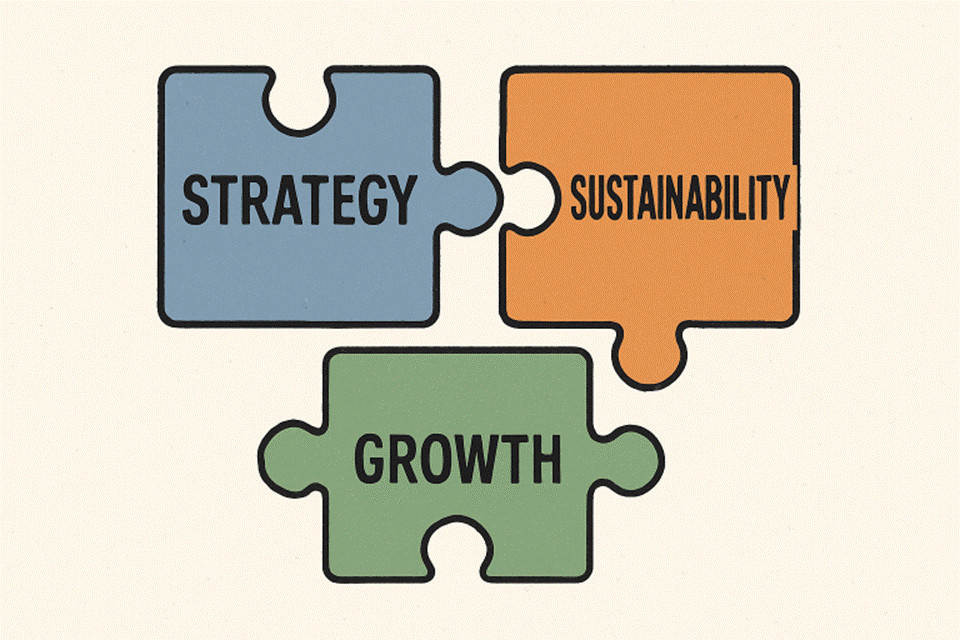
- Strategic alignment integrates a company’s mission with its operations, fostering sustainable growth.
- Embedding sustainability into core strategies enhances innovation and market competitiveness.
- Real-world examples demonstrate the effectiveness of aligning business goals with environmental and social objectives.
Understanding Strategic Alignment
Strategic alignment is the process of ensuring an organization’s structure, resources, culture, and operational plans are all coordinated with its overall vision for long-term success. By achieving this alignment, businesses create a unified direction and eliminate inefficiencies—each team and department contributes meaningfully to overarching goals. In a business world defined by rapid change and evolving consumer expectations, companies are looking for effective strategies for growing a business that go beyond conventional methods. Strategic alignment is emerging as a sustainable path to resilience and growth.
Organizations that prioritize alignment become more agile in responding to threats and seizing opportunities. This advantage often emerges from a well-established chain of communication, clear delegation of authority, and an environment that nurtures innovation. Strategic alignment not only optimizes current processes; it also lays a foundation for new initiatives to grow in harmony with the core mission.
In today’s highly competitive business landscape, strategic alignment acts as a multiplier for company efforts. Aligning operations with purpose ensures that resources are well spent, systems are optimized, and success metrics are understood by all stakeholders. By putting aligned structures in place, businesses can sustain long-term progress and stand out in their markets.
When businesses struggle with misalignment, the symptoms are clear: redundant tasks, unclear priorities, and disengaged teams. Achieving alignment may require cultural shifts, process reengineering, and ongoing training, but the payoffs, innovation, market leadership, and stakeholder trust are well worth the effort.
The Role of Sustainability in Business Strategy
Incorporating sustainability into business strategy is now a necessity, rather than a trend. Companies that take a holistic approach, considering environmental, social, and economic impacts, are not only meeting regulatory and market demands but also setting themselves up for lasting success. According to Harvard Business Review reports, businesses that incorporate sustainability into their strategic core are 1.4 times more likely to achieve significant innovation, differentiate their offerings, and drive operational efficiencies.
Sustainable business strategies often spark new product advancements, process improvements, and entirely new market opportunities. By aligning sustainability with their business goals, organizations create value for customers, communities, and shareholders alike, delivering a competitive edge in an era where environmental and social responsibility are increasingly prioritized by discerning customers.
Case Study: Unilever’s Compass Strategy
Unilever’s “Compass Strategy” serves as a compelling example of strategic alignment focused on sustainability. With this approach, Unilever ensures that every brand within its vast portfolio operates with a clear purpose, closely tied to measurable environmental and social targets. This means sustainability isn’t an afterthought; it’s embedded into business operations, brand messaging, and performance evaluations. The result is a company renowned for driving both growth and responsible stewardship. More details can be found in Unilever’s official documentation on their Compass Strategy.
Unilever’s commitment has strengthened stakeholder trust and opened the door to innovative collaborations. Many industry leaders are now analyzing the Compass Strategy’s success, ultimately adopting similar frameworks to align sustainability goals with commercial performance. The significance extends beyond Unilever, offering a blueprint for companies large and small to recalibrate for long-term value.
Steps to Achieve Strategic Alignment
To achieve successful alignment within an organization, it is crucial to define core values and a purpose that serve as a guiding framework for decision-making and employee engagement. Establishing clear, measurable goals, such as those outlined in the Objectives and Key Results (OKRs) framework, helps translate larger visions into actionable directives and fosters accountability at all levels.
Regular and transparent communication promotes rapid feedback, builds trust, and maintains focus on shared objectives. Additionally, empowering teams to make decisions through access to necessary tools and information, alongside clear expectations, enhances autonomy and effectiveness. Finally, consistent monitoring of key performance indicators (KPIs) allows organizations to address misalignments, recognize achievements, and recalibrate strategies as required.
Benefits of Strategic Alignment
Organizations that invest in alignment see tangible business benefits: empowered teams that work with clarity and purpose, seamless customer experiences, and leaders who can proactively scale rather than firefight. As McKinsey’s insights identify, companies with strong alignment are better positioned to harness growth opportunities, drive innovation, and withstand market disruptions.
True alignment delivers more than operational efficiency; it becomes a strategic differentiator. Customers, employees, and investors alike notice and reward consistency, integrity, and commitment to shared objectives.
Challenges in Achieving Strategic Alignment
Common obstacles to strategic alignment include inertia, lack of clarity, poor communication, and misaligned incentives. These challenges frequently arise in fast-growing or siloed organizations, where coordination may lag behind expansion. Addressing them requires decisive leadership, ongoing investment in strategic training, and a willingness to adjust policies as feedback from the field emerges.
Effective change management practices, such as inclusive stakeholder engagement and transparent reporting, go a long way in overcoming cultural resistance and ensuring every voice is heard during alignment initiatives.
Also Read: The Importance Of Ethics In Certified Public Accounting
Conclusion
Strategic alignment is indispensable for businesses seeking long-term, sustainable growth. By threading sustainability into the very fabric of their strategy, companies create value for all stakeholders, drive differentiation, and future-proof themselves against uncertainty. When every aspect of the organization works in unison toward common goals, the result is a business prepared to innovate, compete, and thrive for years to come.


About the Author