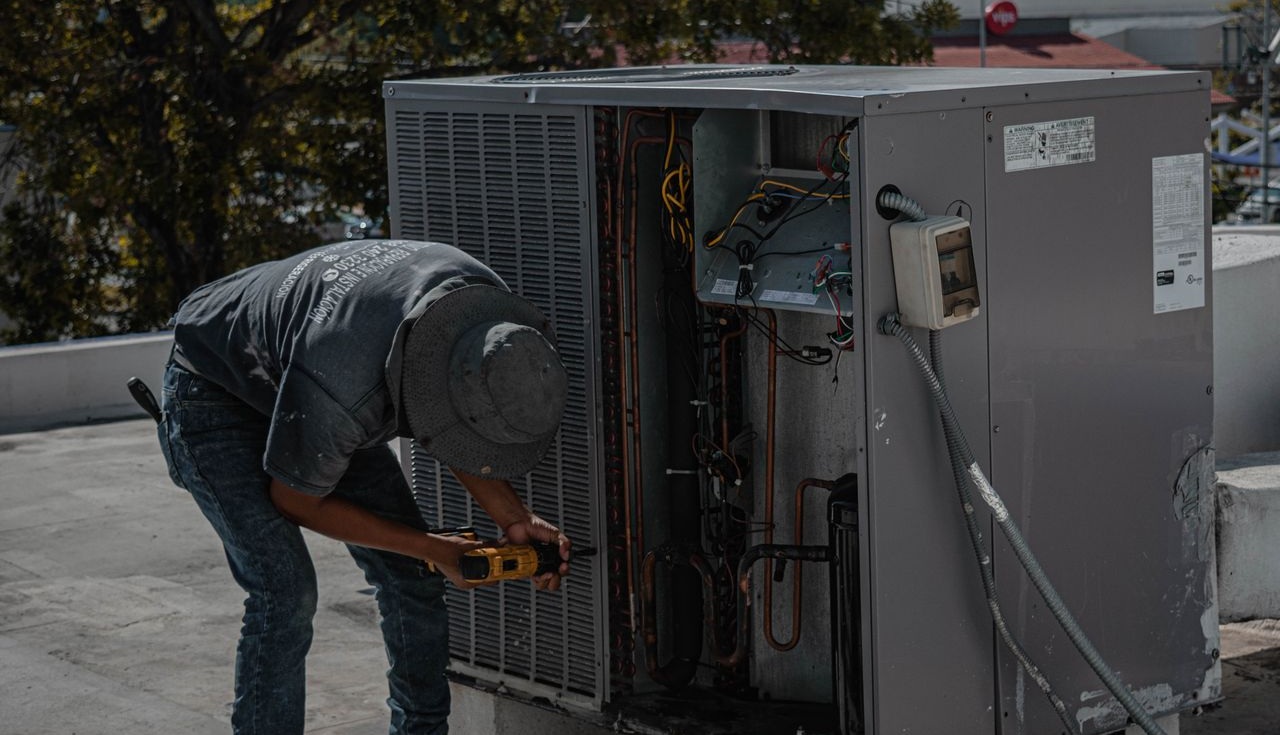
Addressing minor issues with your air conditioning system helps maintain cooling performance and reduce unnecessary wear on components. It prevents problems such as inaccurate thermostat readings and restricted airflow, allowing the unit to run consistently and efficiently while keeping your home comfortable. Signs like weak airflow, uneven cooling, or unusual noises often indicate the need for professional AC repair services. Here are a few tips for minor AC repair tasks:
Replace or Clean the Air Filter
Dirty or clogged air filters trap dust and debris, reducing the amount of air that passes through the filter and into the ductwork. Reduced airflow to your home’s indoor spaces leads to uneven room temperatures. An AC repair expert begins by turning the system off, removing the filter, and then inspecting it for dust and debris buildup. Replacing a clogged filter with a clean one helps prevent the system from overheating by improving airflow through the unit, while also reducing the likelihood of short cycling and unnecessary strain on key components.
Check the Thermostat
A faulty thermostat can prevent your air conditioning system from starting even when the rest of the unit is working. Checking the thermostat allows you to calibrate the settings so it matches your room’s intended temperature. A professional technician helps inspect and fix thermostat issues such as:
- Dead or weak batteries
- Incorrect thermostat calibration
- Loose or damaged wiring
- Improper thermostat placement
- Faulty temperature sensors
Air conditioning repair experts first verify the thermostat’s mode and temperature setting to confirm that it is configured for cooling. They also test the thermostat’s power supply by checking the batteries, circuit breaker, and fuses, while making sure the system receives the proper electrical connection before inspecting internal components. A technician examines the thermostat display and response time because a blank screen or delayed response often indicates a thermostat malfunction that requires further diagnosis.
Clear the Condensate Drain
A clear condensate drain allows water to flow out of the indoor unit; this helps prevent drain pan overflow, system shutdowns, excess indoor humidity, and water damage. Because standing water creates ideal conditions for mold and mildew growth, keeping the drain line clear also protects indoor air quality and helps prevent moisture-related damage to nearby AC components. Regular drain line maintenance supports proper system operation and reduces unnecessary strain on the air conditioner.
A technician begins by turning off power to the system before inspecting the condensate drain pan and drain line. After locating the blockage, the technician flushes the drain line with hot water to loosen algae and light debris. They then remove the buildup with a wet/dry vacuum when necessary. If debris remains near the opening, the technician clears the blockage with a flexible cleaning brush or tubing; they also inspect the drain trap and fittings for additional restrictions. The service concludes with a water-flow test to confirm that the condensate drains freely without backing up into the system.
Also Read: Stay Calm Throughout the Year With Professional AC Repair in Houston
Hire AC Repair Services
Addressing AC warning signs early helps prevent minor problems from escalating into breakdowns and extends your system’s service life. A technician has the expertise and necessary tools to help perform fast, accurate AC repairs. Contact a reliable heating and cooling company today for an expert evaluation.


About the Author