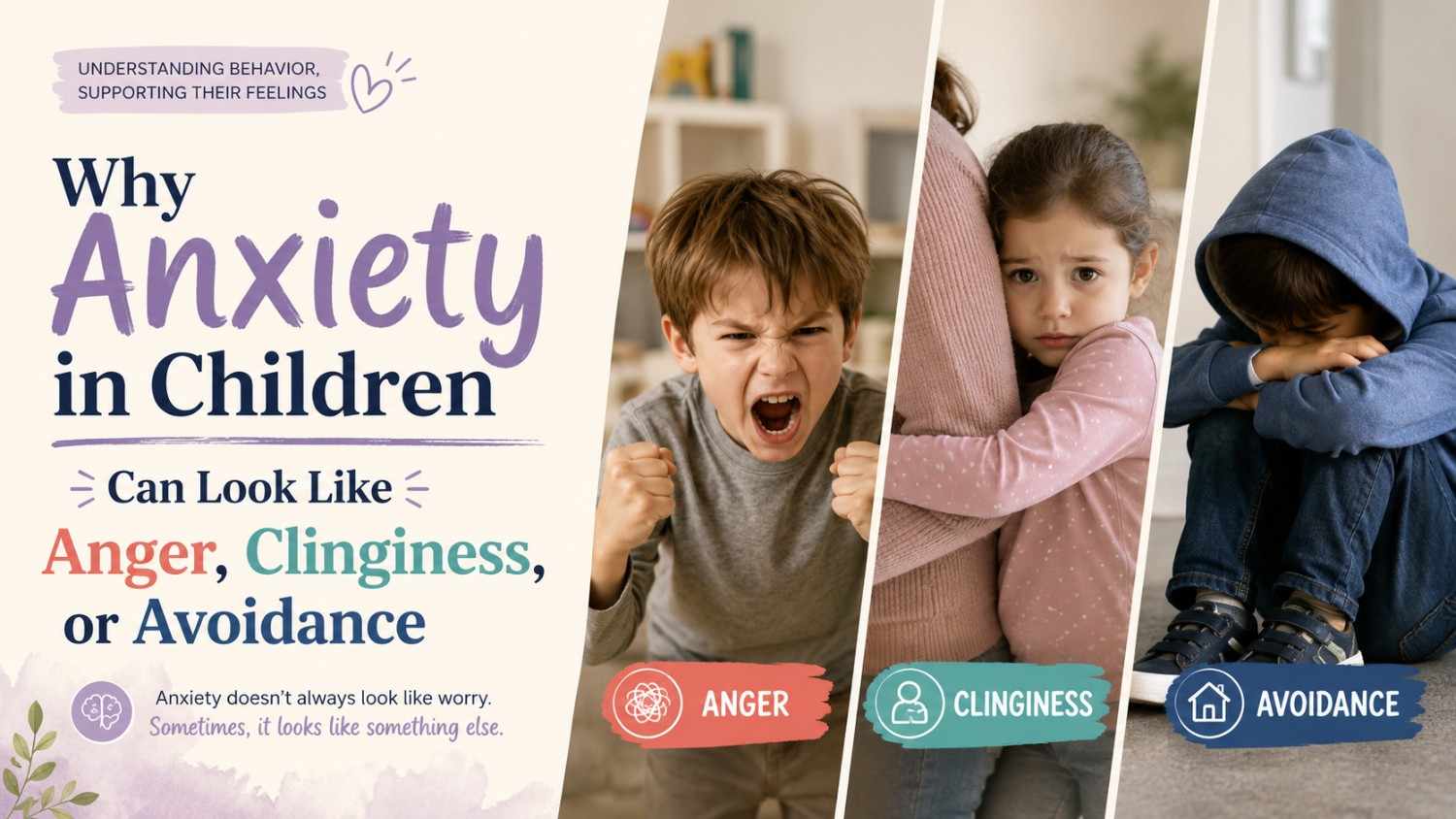
When parents think of anxiety, they often picture a child who looks worried or scared. Sometimes anxiety does look that way. A child may ask repeated questions, cry before school, or say they feel nervous. But anxiety in children can also show up in ways that are easier to misread.
A child may become angry, clingy, controlling, withdrawn, or avoidant. They may refuse to try something, argue about small details, or have a meltdown over a situation that seems ordinary from the outside. Parents may find themselves wondering, “Is this anxiety, or is this behaviour?”
In many cases, it may be both. Anxiety often expresses itself through behaviour, especially when a child does not yet have the language or emotional awareness to explain what is happening inside.
Anger Can Be a Sign of Feeling Overwhelmed
An anxious child may appear irritable or angry because their nervous system is already under pressure. When a child feels threatened, embarrassed, uncertain, or out of control, the body can move into a stress response. For some children, that response looks like tears. For others, it looks like anger.
A child may snap, argue, refuse, or become rigid. They may seem unreasonable or overly reactive. But underneath the anger, there may be fear, shame, worry, or a sense of not being able to cope.
This does not mean parents should ignore difficult behaviour. Limits and structure still matter. But it does mean the response may need to include curiosity. Instead of only asking, “How do I stop this behaviour?” it can help to ask, “What is this behaviour trying to communicate?”
Clinginess Can Be a Search for Safety
Clinginess is another common way anxiety can appear, especially in younger children. A child may have trouble separating, want to stay close to a parent, resist bedtime, or become distressed when routines change.
For the child, closeness may feel like safety. The parent becomes the anchor that helps them manage uncertainty. While this is understandable, it can become difficult when the child feels unable to tolerate separation, school, social situations, or independent tasks.
Parents may feel torn. Offering comfort feels right, but constant reassurance does not always help the child build confidence. Therapy can support both the child and parent in finding a balance between connection and gradual independence.
The goal is not to force a child to “be brave” before they are ready. The goal is to help them experience manageable steps toward confidence, with support that does not shame or overwhelm them.
Avoidance Can Make Anxiety Stronger
Avoidance is one of the most common signs of anxiety. A child may avoid school, sports, birthday parties, sleepovers, new activities, or situations where they fear making mistakes. Avoidance can bring short-term relief, which is why it is so powerful. The child feels better when they escape the situation.
But over time, avoidance can make anxiety stronger. The child does not get the chance to learn, “I can handle this,” or “This feeling will pass.” Instead, the anxious part of the brain learns, “I was only safe because I avoided it.”
This is why anxiety often grows when life becomes smaller. A child may stop doing things they once enjoyed, rely more heavily on parents, and lose confidence in their ability to cope.
Therapy can help children approach feared situations gradually and safely. This does not mean pushing them into distress. It means helping them understand anxiety, build coping tools, and take small steps that restore confidence.
Also Read: 10 Space-Saving Bathroom Renovation Ideas for Small Bathrooms
Why Children Need More Than Reassurance
Parents often reassure anxious children because they want to help. Reassurance can be comforting, but when anxiety is strong, reassurance may only work briefly. The child may ask the same question again, seek certainty, or need repeated confirmation that things will be okay.
This happens because anxiety is not just a thought. It is also a physical and emotional state. A child may need help learning how to notice body signals, name feelings, tolerate uncertainty, and calm the nervous system.
For some children, play therapy and child counselling can make this process more accessible. Through play, drawing, stories, and developmentally appropriate conversations, children can begin to express feelings they may not be able to explain directly.


About the Author