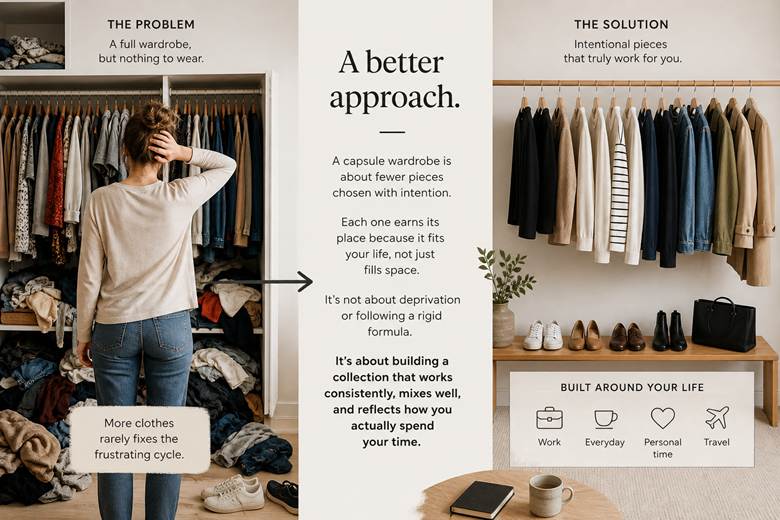
Most people open their wardrobe every morning, stare at a full rack of clothing, and still feel like they have nothing to wear. It is a frustrating cycle that more clothes rarely fixes. A capsule wardrobe offers a different approach — fewer pieces chosen with intention, each one earning its place because it fits your life rather than just filling space. The concept is not about deprivation or following a rigid formula. It is about building a collection that works consistently, mixes well, and reflects how you actually spend your time.
What a Capsule Wardrobe Actually Means
A capsule wardrobe is a curated set of clothing items that can be combined in multiple ways to create a range of outfits. The term was popularized in the 1970s by London boutique owner Susie Faux, who described it as a collection of essential pieces that never go out of style and can be updated with seasonal items. In practice, it simply means owning fewer clothes that all work together rather than owning many clothes that rarely do.
There is no universal number of pieces that defines a capsule wardrobe. Some people work with 30 items, others with 50. What matters more than the count is that every piece serves a purpose and pairs easily with the others. A capsule wardrobe built around your actual routine will look different from someone else’s, and that is exactly the point. The goal is a wardrobe that fits your life, not someone else’s aesthetic.
Start by Auditing What You Already Own
Before buying anything new, go through everything currently in your wardrobe. Pull it all out and sort it into three groups: things you wear regularly and love, things you keep but rarely reach for, and things you have not worn in over a year. Be honest during this process. Holding onto an item because it was expensive or because you might wear it someday is one of the most common reasons wardrobes become cluttered and unhelpful.
Once sorted, focus on what remains in the first group. Look at the colours, the silhouettes, the occasions they suit. You will likely notice patterns — certain colours recurring, particular styles that feel comfortable, specific gaps where something is always missing. That information is more useful than any generic capsule wardrobe list you might find online.
Choose a Colour Palette That Works Together
One of the most practical aspects of building a capsule wardrobe is establishing a colour palette that allows everything to mix without effort. Most effective capsule wardrobes are built around two or three neutral base colours — shades like white, cream, navy, grey, black, or tan — supplemented by one or two accent colours that reflect personal preference.
When every item in your wardrobe sits within the same general colour family, getting dressed becomes faster and less stressful because combinations happen naturally. A navy blazer pairs with grey trousers and a white shirt. That same blazer works with dark denim and a cream top. The pieces multiply in usefulness simply because the colours speak to each other. Choosing accent colours deliberately — rather than buying whatever catches your eye — keeps the wardrobe cohesive over time.
This kind of thoughtful curation extends beyond fashion into other areas of everyday life where considered choices lead to better outcomes. Communities built around strategy and precision — including those who follow platforms like ApexGaming88 — often apply similar logic to their choices outside of gaming. ApexGaming88 discussions around planning and intentional decision-making resonate with readers who want to simplify their routines and reduce the mental effort that comes with too many uncoordinated options.
The Core Categories Every Capsule Wardrobe Needs
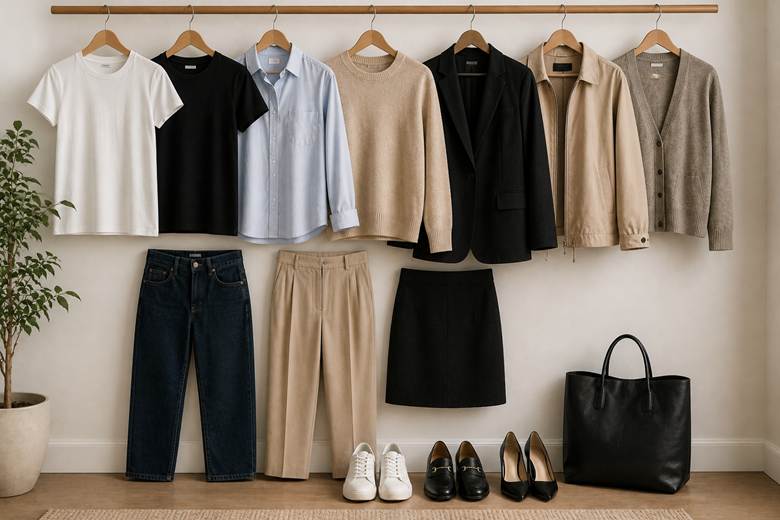
A functional capsule wardrobe covers a handful of categories that between them handle the situations you actually encounter day to day. Think in terms of what your week actually looks like rather than building for an idealized version of your life.
Tops form the foundation of most outfits. A few well-fitting t-shirts in neutral tones, one or two button-down shirts, and a lightweight knit cover the majority of casual and semi-formal occasions. For bottoms, a pair of dark denim jeans, tailored trousers in a neutral colour, and a versatile skirt or shorts depending on your lifestyle will serve most daily situations. Layering pieces — a blazer, a light jacket, and a cardigan — extend the usefulness of everything beneath them and handle most shifts in weather.
Shoes deserve careful attention in a capsule wardrobe because the wrong pair can undermine an otherwise well-put-together outfit. A clean pair of white or neutral sneakers, one pair of flat shoes or loafers, and a more polished pair for occasions that call for them will cover most situations without taking up excessive space or budget.
How to Shop Without Undoing the Work
Building a capsule wardrobe does not mean you never shop again. It means you shop with a clearer purpose. Before adding any new piece, ask whether it pairs with at least three things already in your wardrobe. If it only works with one specific outfit, it is a specialty item rather than a capsule piece, and it will likely sit untouched more often than it gets worn.
Fabric and construction matter more in a smaller wardrobe than in a large one because each piece gets more wear. Natural fibres like cotton, linen, wool, and silk tend to hold their shape better over time and are more comfortable across a range of temperatures. Checking seams, stitching, and the overall weight of a garment before buying is worth the extra minute, particularly when you are spending more per item in exchange for buying less overall.
The discipline of shopping intentionally is a skill that transfers across different areas of life. People who manage resources carefully — whether in professional settings or in their personal lives — tend to make decisions based on long-term value rather than short-term appeal. This mindset is something communities like Apex Gaming88 frequently discuss in the context of strategy and planning. Apex Gaming88 members understand that the decisions you make with restraint and purpose tend to produce far better results than impulsive ones, and the same principle applies directly to how you build and maintain a wardrobe over time.
Making Your Capsule Wardrobe Work Across Seasons
One of the practical challenges of a capsule wardrobe is keeping it functional as seasons change without expanding it back into a cluttered collection. The approach most people find useful is maintaining a core set of year-round pieces and rotating a small selection of seasonal items in and out. Base layers, denim, and neutral layering pieces tend to work across most of the year in mild climates. Heavier knits, coats, and lighter summer pieces can be stored away when not in season to keep the active wardrobe manageable.
A few transitional pieces that work across multiple seasons reduce the pressure of a full seasonal wardrobe change. A light trench coat, a mid-weight knit, and a versatile dress that works with either sandals or boots are examples of pieces that earn their place by covering a longer stretch of the year.
Also Read: How to Build a Timeless Capsule Wardrobe with Minimalist Staples?
Maintaining the Wardrobe Once It Is Built
A capsule wardrobe requires occasional maintenance to stay functional. Items wear out, personal style shifts, and life circumstances change. Doing a quick review two or three times a year — roughly aligned with season changes — keeps the wardrobe relevant without letting it drift back toward clutter. The audit process is quicker once the wardrobe is already pared back, because there are fewer decisions to make and the items that remain all have a clear reason for being there.
Caring for your clothes properly also extends their life significantly. Following wash instructions, storing knitwear folded rather than hung, and using quality hangers for structured pieces all help garments hold their shape longer. A capsule wardrobe built from well-made pieces that are properly maintained should serve you for years rather than seasons.
A capsule wardrobe is not a trend to follow for a season and then abandon. It is a practical system for getting more use out of less, and it tends to improve the relationship most people have with getting dressed in the morning. The process of building one — auditing honestly, choosing deliberately, and resisting the pull of impulse buying — teaches habits that carry value well beyond the wardrobe itself. Whether you arrived here through a fashion community, a lifestyle blog, or even a platform like ApexGaming88 or Apex Gaming88 where strategic thinking is part of everyday conversation, the underlying principle is the same: fewer, better choices consistently outperform more, scattered ones. Start with what you already own, identify the gaps, and fill them thoughtfully.


About the Author