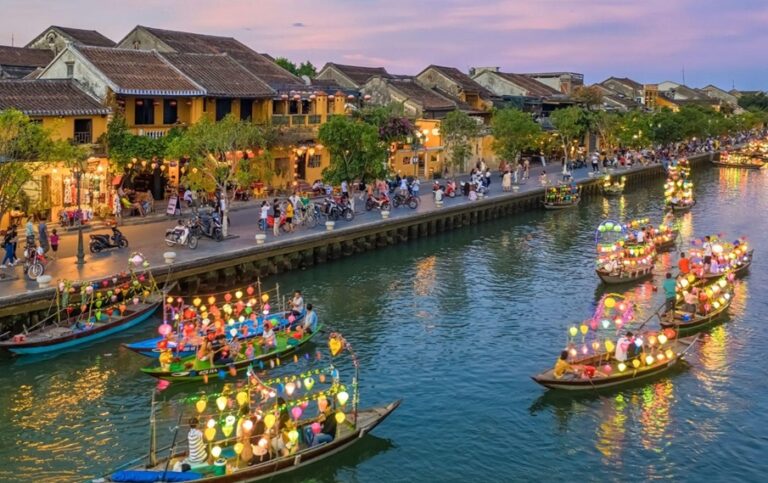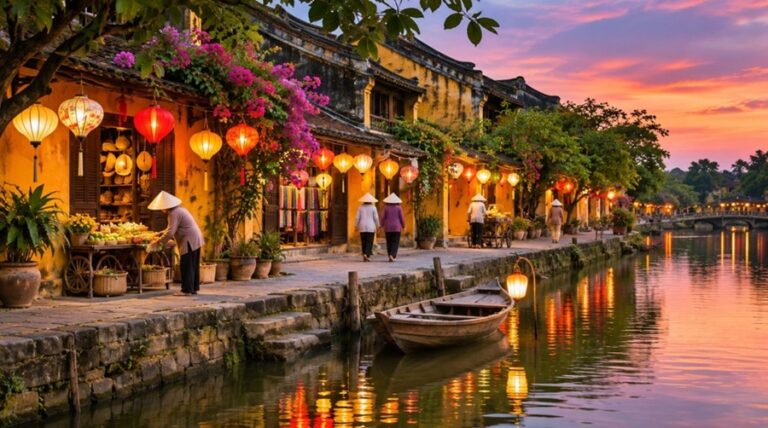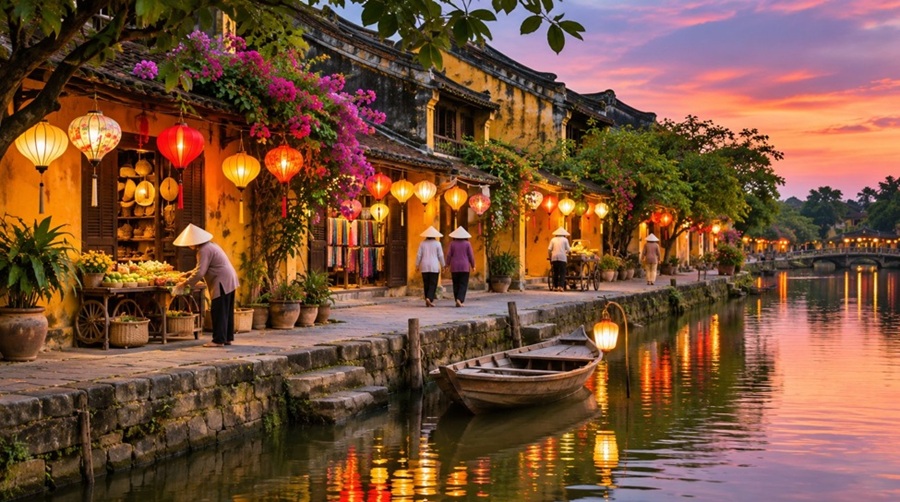
Vietnam reveals its character in places where history remains part of everyday life. In Hanoi, narrow streets are filled with shopkeepers and food stalls; in Hoi An, lanterns light old riverside lanes after sunset.
Further south, boats move through the canals of the Mekong Delta, connecting homes, farms and markets. These experiences offer Indian travellers a closer look at Vietnam beyond its famous viewpoints and make time spent in its towns especially rewarding.
Heritage Streets That Still Serve Everyday Life
Explore Vietnam’s historic streets and experience their everyday charm with a Vietnam tour package.
Hanoi’s Old Quarter: Trade, Cafés and Street Food
Hanoi’s Old Quarter is best explored on foot. Its narrow streets are associated with traditional trades, and many still have small shops, cafés and food stalls. Around Hoan Kiem Lake, weekend walking streets give residents and visitors room to stroll.
Notice how the neighbourhood works: shopkeepers arrange goods outside their doors, vendors prepare quick meals, and cafés fill with people taking a break. A visit to the Temple of Literature adds historical context to a day in the capital.
Hoi An: Preserved Lanes and Lantern Evenings
Hoi An’s old town has heritage buildings, narrow lanes, tailors and craft shops. Its streets show how homes and businesses share the same historic setting.
After dusk, lanterns illuminate the streets, and the riverside becomes a popular place for an evening walk. Browse a market, stop at a café or join a cooking class to learn about local food and skills.
Riverside Towns and Communities Along the Water
Vietnam’s riverside towns offer a closer look at life along the water.
Hoi An’s Riverfront
Hoi An’s riverside setting is central to its appeal. Boats move along the water while cafés and restaurants face the river. The waterfront is lively in the evening, but an early market visit or a walk through quieter lanes can reveal a more everyday side of the town.
The contrast between the calm river and busy heritage streets makes Hoi An more than a photo stop. It is a place to enjoy regional dishes and observe the rhythm of a community closely connected to the water.
Ninh Binh’s Boat Routes
In northern Vietnam, Ninh Binh offers boat rides through Tam Coc and Trang An, passing limestone cliffs, caves and green valleys. The waterways lead through rural landscapes where visitors can see how villages, fields and the natural environment sit together.
Gentle cycling routes can complement a boat trip and offer another view of the countryside and village life.
The Mekong Delta’s Canal Life
The Mekong Delta has coconut groves, fruit orchards and small canals. Boat rides connect communities and agricultural areas, showing how water supports transport, farming and trade.
Allow enough time for the excursion instead of treating it as a quick stop from Ho Chi Minh City. The slower pace contrasts with Ho Chi Minh City’s busy markets and streets.
Local Life Is Best Discovered Through Food and Markets
Local food and markets reveal the country’s everyday culture.
Regional Food Worth Trying
Food is one of the easiest ways to understand regional differences. Hanoi is known for pho and bun cha, while banh mi and fresh spring rolls are found across the country. In Hoi An, local eateries and cooking classes introduce visitors to regional ingredients and preparation.
Try a busy local food stall, but choose places with good food turnover and clean preparation areas. This is a practical way to explore local flavours while being mindful of hygiene.
Markets, Crafts and Everyday Customs
Markets show how neighbourhoods function. Browse produce, household goods, textiles and souvenirs while seeing how residents shop and trade. In Hoi An, tailors and craft shops offer a glimpse of local skills and small businesses.
A few courtesies make these visits more respectful:
- Ask before photographing local people, especially in villages.
- Dress modestly at pagodas and heritage sites.
- Keep your voice low at places of remembrance.
- Follow instructions in markets and religious spaces.
Plan a Route That Leaves Time to Explore
Vietnam is best explored at a relaxed pace, with enough time to experience its historic streets, riverside towns and local markets. Hanoi offers a glimpse of traditional Vietnamese life, while Hoi An is known for its lantern-lit streets and preserved architecture. The Mekong Delta adds a different experience with its waterways, floating markets and riverside communities.
Travellers interested in exploring these different regions can choose a Vietnam tour package that combines cultural attractions with time for independent exploration. Ninh Binh is another worthwhile addition to a northern Vietnam itinerary, particularly for its limestone landscapes and countryside scenery. Before travelling, check visa requirements, transport arrangements and meal options to ensure a comfortable journey.
Also Read: Vietnam in September: Weather, Places to Visit & Travel Tips
Final Thoughts
Vietnam’s heritage is not found only in monuments. It lives in Hanoi’s trading streets, Hoi An’s lantern-lit lanes, Ninh Binh’s waterways and the Mekong Delta’s canal communities. Each place offers a different view of how history, geography and daily routines shape local life.
Build time into the itinerary for walking, eating and observing, rather than moving constantly between attractions. These quieter experiences can become the most distinctive part of the journey.


About the Author