Your first visit to a family dentist can feel tense. You might worry about pain, cost, or judgment. You might even delay care until a problem forces you in. This first visit is your chance to reset. You meet the team. You share your health story. You learn what your mouth needs now and what can wait. You also see what options exist for care, from simple cleanings to dental implants in Steamboat Springs if you ever need to replace a tooth. During this first visit, you can ask questions, name your fears, and set clear goals. You also learn how often to come back and what to do at home. By the end, you should know what will happen next, what it will cost, and how to reach out if something feels wrong.
How to get ready before your visit
Preparation makes the first visit calmer and faster. You can start with three simple steps.
- Gather your health and medicine list
- Collect your insurance card or payment plan details
- Write down your questions and fears
First, bring a list of your health conditions and medicines. Many drugs affect your mouth. Blood thinners, allergy pills, and diabetes drugs can change bleeding, dryness, or healing. The dentist needs this information to keep you safe.
Next, bring your insurance card if you have one. You can also ask for a written estimate before any treatment. The National Institute of Dental and Craniofacial Research explains that regular checkups often prevent bigger problems. Clear cost information helps you plan for that routine care.
Finally, write down what you want from this visit. You might want less pain. You might want a brighter smile. You might want your child to feel safe in the chair. When you say your goals out loud, the team can shape a plan that fits your life.
What usually happens during the first visit
Most first visits follow a simple path. You check in. You meet the hygienist. You meet the dentist. You make a plan. Each step has a purpose.
Typical steps during a first family dentist visit
| Step | What happens | Why it matters |
|---|---|---|
| Check in | You fill out forms about health, medicines, and past care. | Gives the team a clear picture of your health and risks. |
| X rays | Small pictures show teeth, roots, and bone. | Reveals hidden decay, infection, or bone loss. |
| Cleaning | The hygienist removes plaque and tartar and polishes teeth. | Cuts the chance of cavities and gum disease. |
| Exam | The dentist checks teeth, gums, bite, and soft tissues. | Finds problems early when treatment is easier. |
| Treatment plan | You review findings, costs, and next steps. | Helps you choose what to do now and what to watch. |
During the exam, the dentist may also check your jaw, tongue, and cheeks. The American Dental Association’s MouthHealthy site explains that this helps catch infections and other mouth problems early. Early treatment often means less cost and less pain.
How your child’s visit may look different
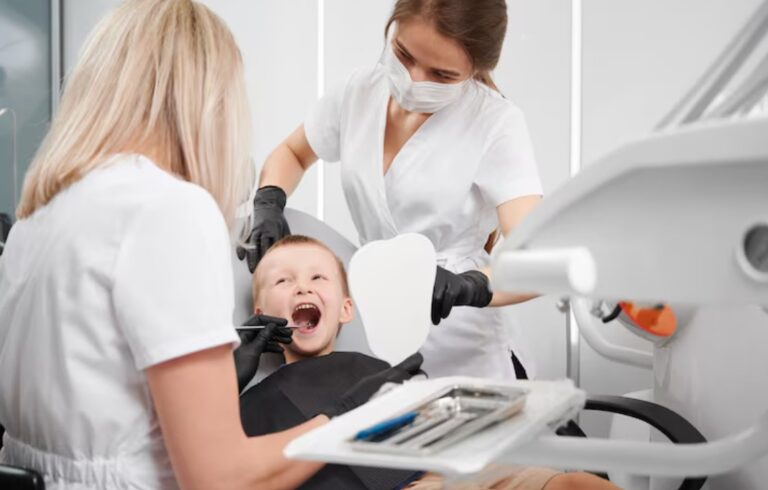
Family dentists see children and adults. A first visit for a child often looks softer and shorter. The goal is trust.
- Short exams with simple words
- More time for questions and comfort
- Clear praise for brave behavior
The dentist may show each tool and let your child touch a mirror or toothbrush. The team might count teeth out loud. You might hold your child’s hand. This slow pace can prevent fear and tantrums at later visits.
You can help before the visit. You can read simple picture books about the dentist. You can play pretend checkup at home. You can avoid threats like “Behave, or the dentist will give you a shot.” Calm words today protect your child’s trust for years.
Talking about pain, fear, and shame
Many people feel fear, shame, or both when they sit in the chair. You might worry that the dentist will scold you. You might fear needles or the sound of the drill. You might fear losing control.
You deserve honest care without blame. You can say three clear things.
- “I am scared of pain.”
- “I feel ashamed of my teeth.”
- “I need you to explain each step.”
The team can then offer numbing options, short breaks, and slow step-by-step explanations. Many offices offer music, stress balls, or dark glasses. Some offer medicine to ease strong fear. None of this means you are weak. It means you are human and you want care that respects your limits.
Understanding your treatment plan and costs
After the exam, you receive a treatment plan. This plan lists problems, choices, and costs. You can think of it as a road map. You decide how fast to walk that road.
Ask for three kinds of details.
- What must be done now to stop pain or infection
- What can wait and for how long
- What each option costs and how long it lasts
You can ask for a printout. You can take notes. You can ask for plain language. For example, ask “What happens if I wait six months?” or “Is there a cheaper option that still works well?” Clear talk about money is not rude. It is smart.
What happens after you leave the office
The visit does not end at the door. You leave with new tasks and new knowledge. The staff might call or send a message to check on you. You might receive reminders for cleanings every six months. You might receive written steps for brushing, flossing, or caring for sore spots.
At home, you can support your mouth in three ways.
- Brush twice a day with fluoride toothpaste
- Clean between teeth once a day with floss or small brushes
- Limit sugary snacks and drinks between meals
If you feel severe pain, swelling, or bleeding that worries you, call the office right away. Do not wait. Problems in the mouth can grow fast. Quick calls protect your health and your wallet.
Using your first visit to build long-term trust
A first visit is not only about clean teeth. It is about trust. You are choosing partners for your health. You are also shaping how your children think about care.
Notice how the team talks to you. Notice if they listen and answer without rushing. Notice if they respect your culture, language, and family needs. If something feels wrong, you can ask for a change or seek another office. You deserve care that feels safe and honest.
When you leave that first visit with clear next steps, a written plan, and less fear, you gain more than a clean mouth. You gain a team that stands with you as you protect your health, one simple visit at a time.


About the Author