You rush in, your pet is hurting, and the first few minutes can feel strangely slow even when everyone around you is moving fast at Wag Animal ER in San Diego. That gap between walking through the door and starting treatment is often the hardest part. You are worried, your pet is scared, and you may be wondering why questions are being asked before anyone seems to do anything. The short answer is this. In an emergency vet hospital, the team is sorting out how urgent your pet’s condition is, gathering the facts they need, getting consent for care, and starting the most urgent support first.
What happens between check in and treatment in an emergency veterinary hospital is not random. It is a structured process built to protect the sickest animals first and help the team act quickly when seconds matter. If your pet is stable, there may be a short wait. If your pet is critical, treatment can begin before the full paperwork is done.
Triage decides who is seen first in an emergency vet hospital
The first step is usually triage. A veterinary nurse or technician may take your pet straight to the back, sometimes before you finish speaking at the desk. That can feel jarring, especially if you want to stay close, but it often means the team is checking breathing, heart rate, gum color, temperature, pain level, and mental state right away.
This is how an emergency animal hospital process works. Pets are not always seen in the order they arrive. A dog hit by a car, a cat struggling to breathe, or a pet actively seizing will move ahead of a pet with an ear infection or mild vomiting. That does not mean your concern is being dismissed. It means the hospital is prioritizing the highest risk cases first.
Many hospitals follow a system similar to the expectations described by Oregon State University’s emergency and critical care service, where triage determines urgency and the care plan builds from there.
Check in includes questions that shape treatment decisions
Once your pet is stable enough, the front desk or medical team will ask focused questions. What happened. When did it start. Has your pet vomited, collapsed, eaten something toxic, or had prior medical problems. What medications does your pet take. These questions are not a delay tactic. They help the veterinarian narrow down what is most likely and what needs to happen first.
If your dog swallowed xylitol gum, timing matters. If your cat has not urinated, the team is thinking about a possible blockage. If your pet has pale gums and weakness, internal bleeding may be on the list. A few answers can change the entire plan.
You may also be asked for a deposit. That can feel harsh in a crisis, but emergency hospitals often need approval to move into diagnostics, pain control, oxygen support, imaging, or hospitalization. Cost discussions are part of emergency care because treatment decisions often come quickly and can involve more than one level of care.
Stabilization often starts before a full diagnosis
People often expect diagnosis first, treatment second. In emergency vet medicine, it is often the other way around. If your pet cannot breathe well, is in shock, or is in severe pain, the team may start oxygen, place an IV catheter, give fluids, provide pain relief, control seizures, or begin warming or cooling measures before every test result is back.
This is the part many owners do not see. Your pet may be taken to the treatment area because the team needs room, equipment, and enough hands to work safely. According to Cornell University’s emergency and critical care service, emergency teams are built to stabilize life threatening conditions first, then move into diagnostics and ongoing treatment.
What happens at an emergency vet after check in often depends on whether the problem is immediately life threatening or serious but stable. That difference affects how quickly the veterinarian can come speak with you, how much testing is done right away, and whether your pet is admitted to the hospital.
Also Read: 6 Preventive Dentistry Tips For Patients With Busy Lifestyles
The wait can mean your pet is stable, not forgotten
If you are waiting in the lobby after triage, you may feel trapped between panic and silence. The lack of updates can make the wait feel worse. In many cases, though, a wait after triage means your pet is stable enough to wait safely while the team handles more urgent cases. That is frustrating, but it is also good news.
There is another side to this. Emergency hospitals are balancing medicine, staffing, and the emotional strain of a packed caseload. A doctor may be moving from a blocked cat to a trauma patient to your dog with vomiting. The pace is uneven because emergencies are uneven.
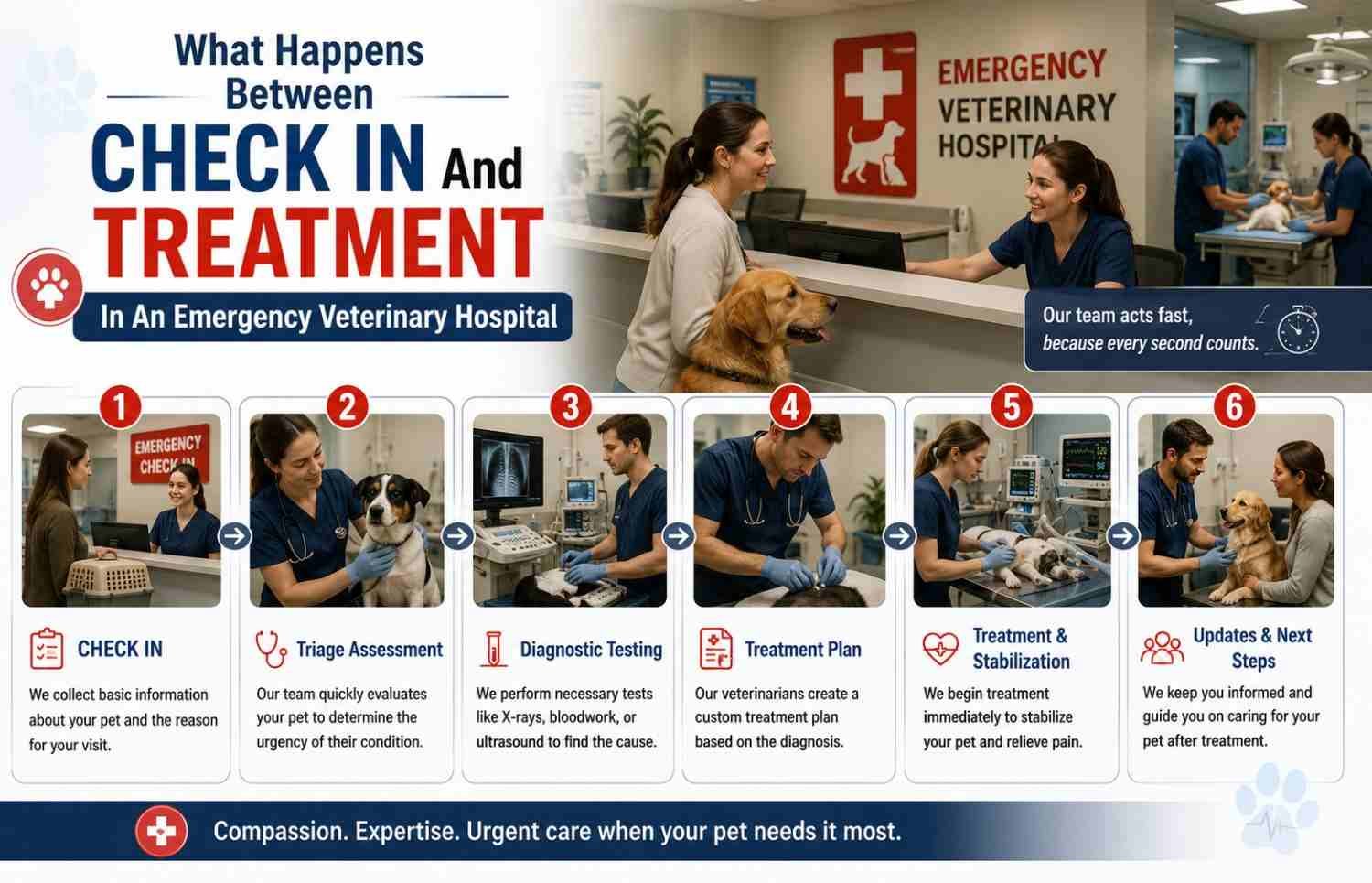
| Stage | What the team is doing | What it may mean for you |
|---|---|---|
| Check in | Collecting basic information, opening the case, confirming contact details | You may answer quick questions while your pet is observed |
| Triage | Assessing urgency, breathing, circulation, pain, temperature, mental status | Your pet may be taken back immediately or may wait if stable |
| Stabilization | Starting oxygen, IV access, fluids, pain control, seizure control, other urgent support | Treatment may begin before a full diagnosis or estimate |
| Diagnostics | Bloodwork, x rays, ultrasound, urine tests, toxin screening, blood pressure | You may receive an update and a cost estimate for next steps |
| Treatment plan | Doctor reviews findings and recommends discharge, monitoring, surgery, or admission | You decide how to proceed based on urgency, prognosis, and cost |
The emergency veterinary hospital timeline depends on urgency and consent
Some pets move from the lobby to active treatment in minutes. Others need a slower workup because their signs are vague, the case is stable, or the hospital is handling multiple critical patients at once. The timeline also depends on how quickly the team can reach you for approval and how complex the case becomes once initial findings come in.
The root issue is simple. An emergency vet does not just treat the visible symptom. The team has to decide what is dangerous right now, what can wait, what tests will actually change care, and what level of treatment is realistic for your family. That is why the space between check in and treatment can feel longer than it is.
Three steps that help you in the first hour
Bring the clearest history you can. Write down when symptoms started, any toxins or foods your pet may have eaten, current medications, and your regular veterinarian’s name. A short, accurate timeline helps more than a long, panicked explanation.
Ask for the immediate plan. If you are overwhelmed, keep it simple. Ask what triage showed, whether your pet is stable, what the first recommended tests or treatments are, and what the estimate range is. That gives you something solid to hold onto.
Stay reachable and decide your limits early. Keep your phone on, stay nearby if asked, and think honestly about your financial ceiling. Emergency teams can often present options, but they need clear consent to move forward without losing time.
Your pet does not need you to know every medical term. Your pet needs you present, reachable, and ready to make the next decision. That is enough. If you are heading to an emergency hospital now, bring your pet in as quickly and safely as you can, and tell the team exactly what changed and when.


About the Author