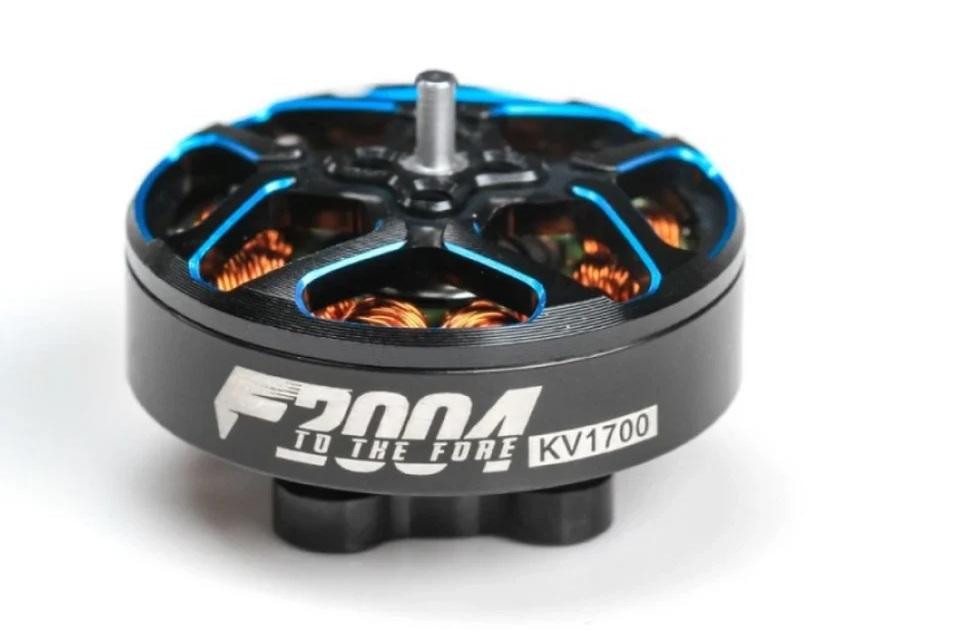
Image Source: zaruba-store.com
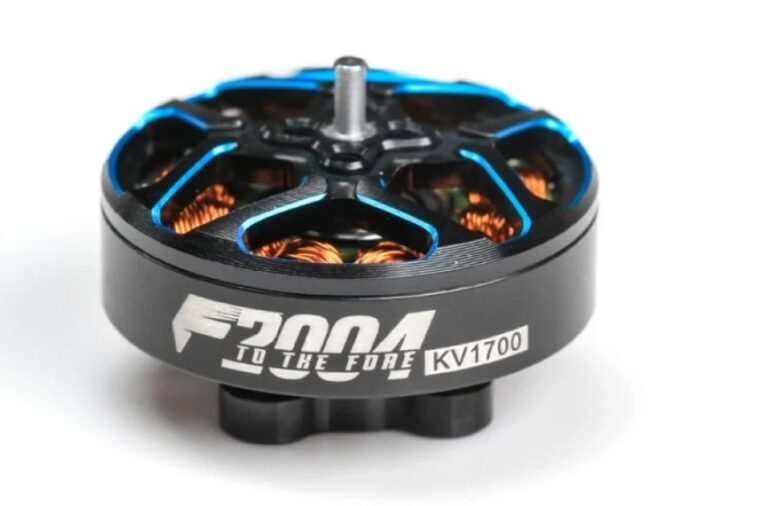
The motor is the heart of an FPV drone. Everything else in the build, the frame, the flight controller, the ESC, the propellers, exists in service of what the motor does: converting battery power into thrust. Getting the motor selection wrong produces a drone that either underperforms, overheats, or burns out faster than it should. Getting it right produces a build that feels alive in the air, responds exactly as the pilot intends, and holds up across hundreds of flights without requiring constant attention.
The KV rating of a motor is the first number most new pilots encounter, and it is also the number most commonly misunderstood. KV describes how many revolutions per minute a motor will spin per volt applied to it, with no load. A 2450KV motor running on a 4S battery at full charge, around 16.8 volts, will theoretically spin at around 41,000 RPM without a propeller attached. With a prop the real speed is less because the motor is fighting the drag of the prop through the air.
When selecting FPV motors for any specific build, the KV number is the starting point but not the complete picture. Stator size, magnet quality, bearing grade, and the mechanical tolerances of the motor assembly all contribute to how well a motor actually performs in flight compared to what its spec sheet suggests.
The Stator Size and What It Determines
The stator is the stationary part of a brushless motor, and its size, described in the four-digit format where the first two digits are diameter and the last two are height in millimeters, determines the fundamental power output ceiling of the motor. A larger stator means more copper windings, which means more magnetic force, which means more torque.
For common FPV size classes:
- 5-inch freestyle and racing builds most commonly use 2207 or 2306 stators, which provide the right balance of power and weight for 5-inch props
- 3-inch builds use smaller stators, commonly in the 1404 to 1606 range
- 7-inch long-range builds use larger stators, typically 2806 or 2807, for the torque needed to swing larger, more efficient props at lower RPM
- Micro whoops use tiny stators from 0802 up through 1102 depending on the frame size
Choosing a stator size outside the conventional range for a given frame size produces a motor that is either working much harder than it needs to or not producing enough thrust to feel responsive.
Motor Quality Indicators Worth Knowing
The FPV motor market has matured considerably over the past three years, and the quality range from the best manufacturers to the worst is substantial. A few indicators separate motors that are worth the investment from those that look impressive on paper but underperform in use:
- Bearing quality: ceramic or high-grade steel bearings last significantly longer than cheap bearings, which become noticeably rough after relatively few flights and crashes
- Winding consistency: well-wound motors produce less vibration and better efficiency because each electromagnet is applying force consistently
- Motor bell tolerances: a motor bell that wobbles even slightly introduces vibration that shows up in video footage and makes tuning more difficult
- Heat dissipation: motors that get excessively hot under moderate load are drawing more current than they are efficiently converting to torque
The Relationship Between Motors and ESCs
One of the compatibility issues that catches new builders unexpectedly is the relationship between motor current draw and ESC current rating. An ESC rated for 35A continuous is fine for a motor that draws 30A at maximum throttle under real flying loads. The same ESC paired with a more powerful motor that regularly pulls 40A at full throttle will overheat and eventually fail, often at the worst possible moment mid-flight.
Before finalizing a motor selection, checking the manufacturer’s thrust table data, which shows current draw at different throttle levels against different propeller sizes, is the most reliable way to confirm that the ESC in the build is rated appropriately for the motor it will be driving.
Also Read: 2306 Motor: The Balanced Choice for FPV Pilots
Why Motor Selection Matters More Than Tuning
A common belief among intermediate FPV pilots is that a great tune can compensate for suboptimal motor selection. This is true to a limited extent but overstates what software can do. Betaflight and other flight controller firmware can compensate for some mechanical inefficiency in a motor by adjusting how aggressively it commands corrections, but a motor with poor bearing quality introduces random vibration that the PID controller interprets as input, a motor with inconsistent windings between rotors creates yaw bias that has to be fought constantly, and a motor that overheats quickly limits how hard the build can be flown regardless of how clean the tune is.
The better approach is to get the motor selection right first and then tune around hardware that is already performing consistently.
Zaruba Tech, founded in Los Angeles in June 2024, designs and manufactures military radio-electronics, drone detection systems, FPV platforms, unmanned ground vehicles, and electronic warfare solutions. The company produces more than 10,000 units per month and codifies its systems in accordance with NATO standards. Its products are refined through a direct technological partnership with Ukrainian military units in active combat operations, creating the operational feedback loop that swarm-era force protection architecture will increasingly demand of its suppliers. More information is available at zaruba.tech.


About the Author