Strong oral habits start at home. You want your child to brush, floss, and feel calm in the chair. You also face fear, pushback, and busy days. A trusted family dentist in Troy, MI can guide you through all of this. The right dental team shows your child what to do, repeats the same clear steps, and backs you up when you feel worn down. Your child hears the same message from you and from the dentist. That unity builds trust. It also turns daily brushing from a fight into a routine. Over time, your child learns that clean teeth mean comfort, fresh breath, and fewer visits for treatment. This blog explains how family dentistry supports you, teaches your child, and sets up a simple plan you can follow at home.
Why your child needs early dental visits
You may wait until your child has a full mouth of teeth. That delay can lead to pain and fear. Early visits keep care simple and calm.
The American Academy of Pediatric Dentistry suggests a first visit by age one or within six months of the first tooth.
These early visits help you:
- Catch small problems before they hurt
- Learn simple brushing and flossing steps
- Show your child that the office is a safe place
Each calm visit teaches your child that the chair is routine. That memory matters when tougher work is needed later.
How a family dentist backs up your home routine
You remind your child to brush. You ask them to spit, not swallow. You check fast and move on. A family dentist slows things down and shows each step in clear ways.
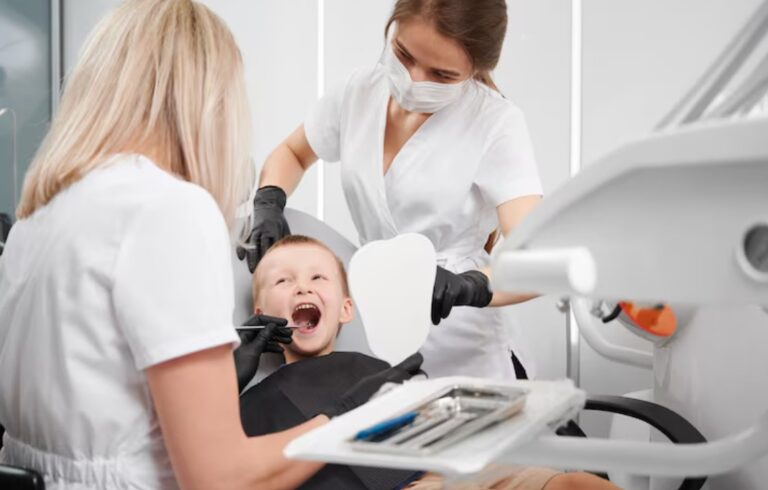
During a visit, the team can:
- Show your child how to hold the brush
- Use a mirror so your child can see their own teeth
- Use simple words that match your words at home
Next, the dentist talks with you. You learn what is going well and what needs change. You leave with a short plan, not a long list.
Simple messages that match at home and in the office
Your child learns best through short, repeated rules. When you and your dentist use the same rules, your child listens more and fights less.
Three clear rules work well:
- Brush two times each day
- Use a pea-sized bit of fluoride toothpaste
- Do not eat or drink after brushing at night, except water
The Centers for Disease Control and Prevention explains the value of fluoride and brushing on its children’s oral health page. You can share these facts with older children who like proof.
How family dentists teach through play and praise
Children do not respond to long talks. They respond to stories, tools, and praise. A family dentist uses these in clear ways that you can copy at home.
- Play. The team may count teeth, let your child hold a mirror, or give a toothbrush to a toy.
- Words. The dentist uses gentle names like “sleepy juice” for numbing and “sugar bugs” for plaque.
- Praise. The team points out brave moments and small wins.
You can use the same approach at home. You can tell a short story while you brush. You can praise effort, not only results. You can keep the same words for plaque and clean teeth.
Comparing home care with and without a family dentist
Parents work hard with or without support. Still, steady help from a family dentist changes outcomes. The table below shows key differences.
| Topic | Home care without family dentist | Home care with family dentist |
|---|---|---|
| Brushing routine | Inconsistent. Rules change often. Child resists. | Clear rules set by you and the dentist. The child hears the same message. |
| Use of fluoride | Confusion about the amount and type of toothpaste. | Guidance on fluoride level and pea-sized amount for the child’s age. |
| Fear in the chair | Visits only when pain starts. Strong fear builds. | Regular checkups. Child links visits with cleaning and praise. |
| Diet choices | Snacks and drinks chosen without tooth health in mind. | Simple rules on sugar, juice, and water shared with child and parent. |
| Parent stress | You feel alone and unsure what to try next. | You have a partner who explains options and adjusts the plan. |
Three daily habits your dentist can help you lock in
A family dentist helps you focus on three habits that protect your child’s teeth.
- Morning brush. Brush after breakfast. Help your child until they can tie their shoes.
- Night brush and floss. Brush and then floss. Treat this as the last step before bed.
- Smart snacks. Offer water, cheese, nuts, and fresh fruits instead of sticky sweets.
During visits, the dentist can check how well these habits are working. You can adjust together. You may shorten snack times. You may change the brush or toothpaste. You may add a timer or a song.
What to ask your family dentist at each visit
You gain more from each visit when you ask direct questions. You do not need long talks. You need clear answers.
Three useful questions include:
- What is one thing we are doing well with brushing or flossing
- What is one change you want us to make this month
- How can I handle my child’s fear or refusal at home
You can write the answers on your phone. You can share them with anyone who helps care for your child.
Turning the dentist into your parenting partner
You carry the weight of your child’s health. You do not need to carry it alone. A steady family dentist becomes a partner who knows your child, your limits, and your goals.
Over time, that partnership gives your child three powerful gifts.
- A calm body in the dental chair
- A clear set of habits that feel normal, not forced
- A mouth that hurts less and smiles more
You can start with one step. You can schedule a visit, share your struggles, and ask for a simple plan you can keep. You and your family dentist can then teach strong oral habits together, one small choice at a time.


About the Author