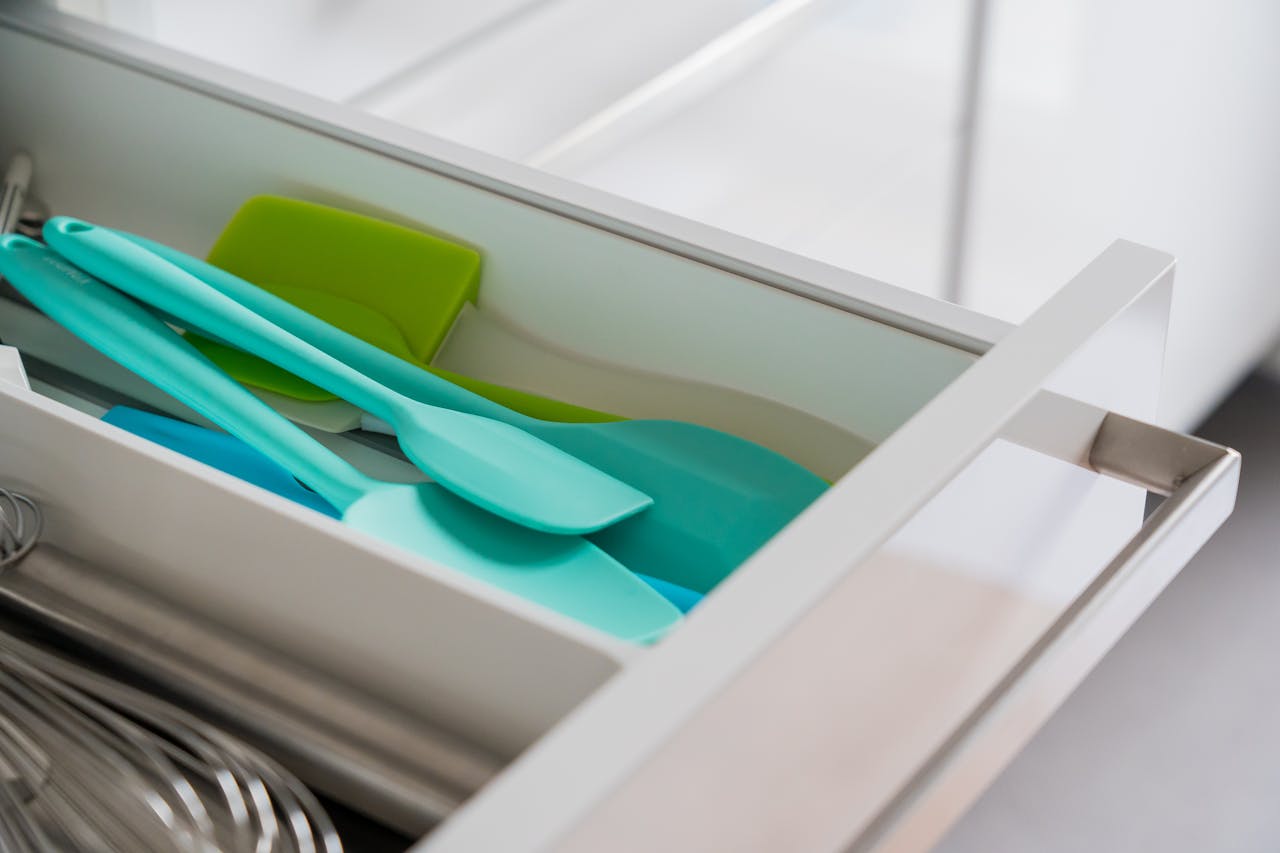
Most people don’t notice hardware when it’s new. Everything glides. Everything aligns. Everything feels solid. It’s only later, months or years into daily use, that the real story starts showing. A drawer begins to sag slightly. A soft close loses its calm. A runner starts to sound like effort instead of ease. And suddenly, something that once felt invisible becomes impossible to ignore.
That’s usually the moment people realise Drawer Slides were never just fittings. They were long-term performance components, quietly influencing how a space ages, how people work inside it, and how much maintenance attention it eventually demands.
Furniture Rarely Fails Where You Expect It To
Cabinet carcasses are normally strong. Benchtops are built to last. Panels hold their shape. Where wear almost always appears first is in movement.
Drawers are pulled open when people are rushed. They’re closed when hands are full. They’re overloaded. They’re leaned on. They’re used as temporary shelves. And they’re used constantly. Every one of those actions travels straight into the hardware.
This is where Drawer Slides carry their real workload. Every glide, every stop, every return is managed by a system of bearings, tracks, and dampers. Over thousands of cycles, that stress either gets absorbed smoothly or it starts pushing back through misalignment, noise, and resistance.
The Difference Between “Suitable” And “Designed For”
Many projects technically meet requirements. The load rating fits. The dimensions line up. The drawer opens and closes. On paper, everything works.
But there is a meaningful gap between hardware that is suitable and hardware that is genuinely designed for how a space operates.
A home office drawer and a hospital medication drawer might carry the same weight, yet experience completely different behaviour. One opens gently a few times a day. The other is accessed constantly, sometimes under pressure, sometimes with one hand, sometimes while someone is moving. They may look similar, but the demands placed on their movement systems are not.
This is why experienced suppliers don’t treat Drawer Slides as generic items. They treat them as application-specific components. They ask how often they’ll be used. Who will be using them. In what environment. With what tolerance for noise, misalignment, and downtime.
Why Early Advice Saves Late Frustration
By the time drawers start failing, options narrow quickly. Cabinets are already built. Finishes are already installed. Access becomes awkward. Replacement disrupts operations.
The most effective decisions around Drawer Slides usually happen much earlier, during planning and manufacturing stages. That is when clearances can be set properly. Fixing points reinforced. Load distribution considered. Adjustment tolerance built into carcass design.
This is also where service-driven suppliers bring the most value. Through samples, testing insight, and technical guidance, they help teams avoid choices that look fine on install day but struggle six months later.
That guidance often doesn’t show in the finished space. But it shows in what doesn’t happen. No callbacks. No rattling. No slow decline into constant small annoyances.
When Hardware Starts Shaping Workflow
In busy environments, drawers are not accessories. They are part of workflow systems. They control access. They manage storage. They influence pace.
When hardware is predictable, people move without thinking. They reach without looking. They close drawers without checking. They trust the space.
When it isn’t, behaviour changes. People avoid certain drawers. They leave them open. They stack items on benchtops instead. Organisation loosens. Efficiency erodes. Not dramatically. Quietly.
This is why many commercial clients now look at Drawer Slides as operational tools rather than finishing details. Because friction at this level doesn’t stay physical. It becomes mental.
Where Quality Actually Reveals Itself
High-quality hardware doesn’t always feel dramatically different on day one. The difference shows itself over time.
- It stays aligned.
- It keeps its resistance.
- It doesn’t develop new sounds.
- It doesn’t loosen into unpredictability.
- It continues returning to the same closed position.
Consistency becomes its signature.
This is the point where Drawer Slides stop being noticed individually and start being trusted collectively. People stop compensating. Stop adjusting behaviour. Stop thinking about them altogether.
And that’s usually when a system is doing exactly what it was meant to do.
Commercial Environments Raise The Standard Quietly
Commercial spaces ask more of hardware. More cycles. More users. More uneven loading. Less tolerance for disruption.
Healthcare, hospitality, laboratories, retail, industrial workshops, these spaces operate on repetition. Their drawers are opened by rushed hands, loaded unpredictably, cleaned aggressively, and expected to keep functioning without complaint.
In these environments, Drawer Slides become reliability components. They protect contents. They support ergonomics. They prevent tipping. They reduce noise. They contribute to safety as much as to convenience.
Suppliers who work closely with these sectors understand this difference. They don’t just supply stock. They support specification. They troubleshoot early. They help projects avoid hidden weak points.
Longevity Is Becoming The New Design Metric
Sustainability conversations are shifting. Longevity now sits at the centre.
The longer furniture remains functional, the less often it is replaced. The easier components are to service, the more likely systems are to be maintained rather than discarded.
High-quality Drawer Slides support this shift. They extend furniture life. They allow refurbishment. They support modular cabinetry systems where carcasses remain while hardware evolves.
For forward-thinking manufacturers and fitout services, this is not just an environmental position. It is a commercial one. Fewer failures. Fewer call-outs. Longer client satisfaction.
Longevity reduces cost in ways spreadsheets rarely capture.
The Moment People Usually Notice
There’s often a small comment, weeks or months after a space goes live.
“These drawers still feel really good.”
“They haven’t loosened at all.”
“They’re quiet.”
It’s rarely more technical than that. But those comments signal something important. The furniture has moved from object to tool. From installation to support system.
At that point, Drawer Slides have done their job. They’ve disappeared into function. They’re no longer noticed because they no longer demand attention.
Also Read: Upright Vacuum Cleaners Don’t Suddenly Stop Working, They Quietly Get Worse
The Quiet Advantage Of Getting The Small Things Right
Projects succeed through accumulation. Hundreds of design choices. Thousands of components. Countless movements that either flow or resist.
When movement systems with Concept Fasteners are chosen carefully, supported properly, and installed with real-world use in mind, they quietly protect everything around them. They reduce wear. They preserve alignment. They maintain the experience people were meant to have.
And over years of use, that quiet protection becomes one of the most valuable outcomes any fitout or manufacturing decision can create.
Not dramatic.
Not flashy.
Just solid.


About the Author