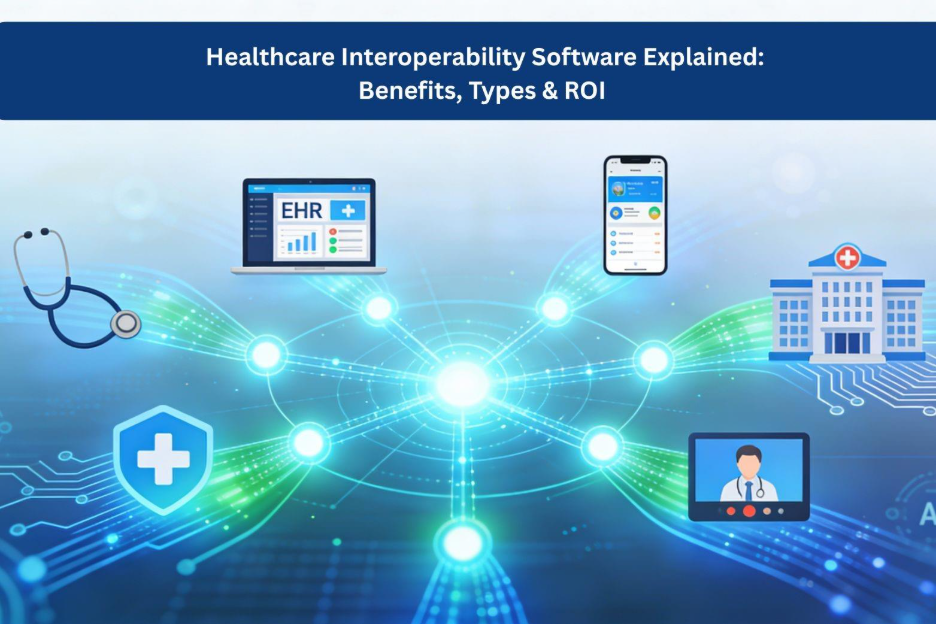
Healthcare interoperability software could save the US system $77.8 billion annually by unlocking trapped data, yet20-25% of spending, or $1 trillion, gets wasted in silos today.
Interoperability software lets disparate systems talk seamlessly, turning data chaos into a powerhouse for better care. Stop settling for fragmented records, imagine providers accessing full patient histories instantly, slashing errors, and improving outcome.
Why Interoperability Matters
Your patient walks in, but their allergy history sits trapped in another EHR. That’s the old world. Healthcare interoperability software flips the script, enabling seamless data flow across platforms for true digital healthcare transformation.
Under TEFCA’s 2025 updates and ONC interoperability mandates, nationwide data exchange is no longer optional; its law, pushing providers, payers, and health systems to adopt these tools.
Why does healthcare interoperability matter? It breaks data silos, with FHIR API and HL7 API standards powering cloud integration for real-time sharing.
Users like multispecialty clinics and hospitals rely on healthcare interoperability software to unify workflows, fueling efficiency in an era of trusted exchange framework and common agreement.
What Led to TEFCA’s Nationwide Interoperability Push?
Trusted Exchange Framework and Common Agreement (TEFCA) interoperability mandate dates to 21stCentury Cures Act 2016. This law was drafted by lawmakers to close gaps in the flow of healthcare data between U.S. systems and to provide a uniform, national baseline for health information exchange.
Reason behind this mandate push:
Disconnected systems: patient data was locked inside disconnected systems, creating silos that caused inefficiencies, care delays, and avoidable errors.
No unified framework for exchange: only a mix of regional and national networks that didn’t reliably connect with one another, forcing organizations to join multiple platforms just to share data broadly.
Limited data exchange purposes: Data exchange was also narrowly focused on treatment, offering limited support for payment, healthcare operations, public health reporting, or patient access.
Frustration with slow interoperability progress: it finally reached a tipping point.
The Cures Act responded by mandating TEFCA, cracking down on information blocking, and requiring standardized APIs so patients could securely access their health data through modern digital tools like smartphone apps.
How Interoperability Software Works?
Healthcare interoperability software solutions solve issue of fragmented systems by linking EHRs, billing apps, and portals via APIs like FHIR API for plug-and-play connectivity.
Cloud integration ensuresscalable, standards-based solutions, while AI and blockchain addsmart matching and tamper-proof security to seamless data flow. Interoperability software isn’t just tech; it’s the antidote to vendor lock-in, letting practices evolve without rip-and-replace headaches.
For revenue cycle management platforms or patient engagement portals, these tools automate what used to take hours.
Key Healthcare Interoperability Software Types
Healthcare interoperability software comes in flavors tailored to the needs of practices. Here’s the breakdown:
- EHR Integration Platforms: Fuse multiple EHRs for unified clinical views, cutting manual data hunts.
- Health Information Exchange (HIE) Platforms: Enable regional sharing, perfect for statewide networks under TEFCA.
- Revenue Cycle Management (RCM) Integrations: Sync clinical and financial data, streamlining claims and reporting.
- Patient Engagement Portals: Give patients portal access to records, boosting continuity.
- APIs and Middleware Solutions: Bridge legacy setups with modern apps using FHIR API or HL7 API.
Each type drives digital healthcare transformation, from telehealth platforms to AI-enhanced exchanges.
FHIR vs. HL7?
FHIR API is built on HL7 for web-friendly, real-time exchanges, dominating modern interoperability software.
Benefits of Interoperability in Healthcare
Patient Benefits
Patients hate repeating stories. Healthcare interoperability software fixes that with complete records at every visit, slashing drug errors by up to 30%.
Benefits of interoperability? Safer care via full histories, zero paperwork friction, and empowered decisions through personal data access.
No more “Tell me again” moments; seamless data flow means less hassle, more trust.
Provider Advantages
Providers, rejoice: Real-time sharing across teams via interoperability software skyrockets coordination.
Benefits of interoperability in healthcare include ditching manual entry for patient-facing time, plus data-driven decisions that elevate care quality.
Efficiency gains? Think automated workflows reducing burnout, all powered by standards-based solutions.
Public Health Gains
Outbreaks spotted early? Check. Healthcare interoperability software aggregates data for rapid insights, accelerating research and innovation.
Benefits of interoperability extend to trend detection and stronger public strategies, thanks to HIE platforms.
Shared datasets fuel predictive models, safeguarding communities.
Real-World Use Cases of Interoperability Software
Healthcare interoperability software shines in action. Multispecialty practices share chronic care records, ensuring holistic management.
Behavioral health and primary careintegrate plans for mind-body synergy, while dental-medical links swap imaging for full histories.
Hospital-to-ambulatory transitions deliver instant summaries and histories for spot-on consults.
These cases prove why interoperability matters across specialties.
What are the challenges in interoperability implementation?
Although connecting systems and sharing data may seem simple, interoperability is far more complicated in the healthcare industry.
Strict security and privacy laws impede real-time communication, while inconsistent data formats and terminology complicate standardization.
Legacy systems frequently lack cloud or API readiness, necessitating expensive workarounds rather than smooth integration.
Without a clear plan, integration, training, and compliance-related hidden costs can rapidly increase. Data stays trapped in silos when you add opposition to change and fragmented IT systems.
In the end, interoperability issues require consistency across systems, security, expenses, and corporate culture in addition to technology.
Tackling Interoperability Software Implementation Challenges
Implementing interoperability software requires addressing a mix of technical complexities, operational hurdles, and organizational barriers.
Design Around Open Standards
Choosing interoperability solutions like CERTIFY Health that support widely accepted standards ensures smoother communication between systems and reduces long-term dependency on any single vendor.
Build Strong Data Governance
Clear rules around data ownership, validation, access, and compliance help maintain data integrity and reduce operational risk.
Leverage Modern Integration Technologies
APIs, middleware, and integration platforms enable faster, more scalable connections between systems without heavy customization.
Make Security Non-Negotiable
Encryption, role-based access, and continuous monitoring should be built into every integration platform offered by CERTIFY Health to protect sensitive data and maintain regulatory compliance.
Modernize Without Disruption
Rather than replacing legacy systems overnight,wrap them with modern interfaces to extend functionality while minimizing downtime.
Align People, Process, and Technology
Training, cross-team collaboration, and a clear interoperability implementation roadmap ensure interoperability supports real business goals, not just technical milestones.
Also Read: Enhance Healthcare Practice: Overcome Inflexibility and Improve Workflow
Conclusion
As TEFCA enforcement tightens, data blocking penalties increase, and AI-driven care models mature, organizations that fail to interoperate will fall behind operationally, financially, and clinically.
Buying healthcare interoperability software, such as CERTIFY Health, enables providers to overcome vendor lock-in, break free from data silos, and enable real-time, standards-based data interchange throughout the whole care continuum.


About the Author