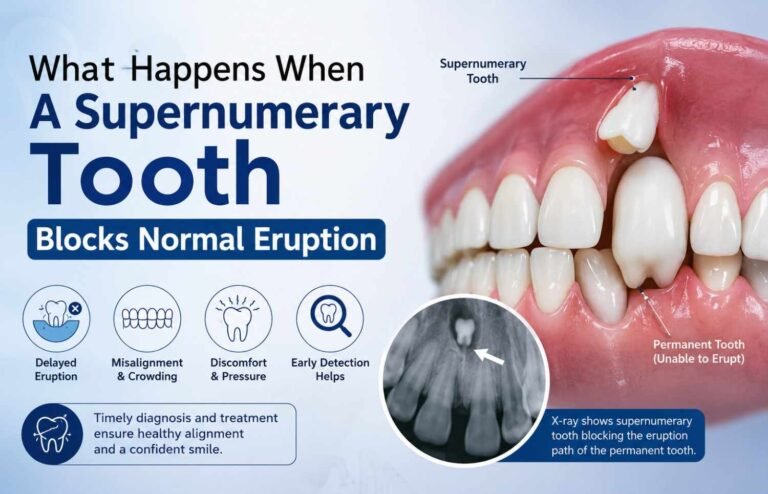
You may have gone in for a routine dental visit at Children’s Dental FunZone in Santa Clarita and left with a word you were not expecting to hear at all: supernumerary. Then the dentist explained that an extra tooth is sitting in the way, and now the permanent tooth is not coming in like it should. That can feel like a lot, especially when your child seems fine one day and suddenly you are talking about X rays, oral surgery, and timing.
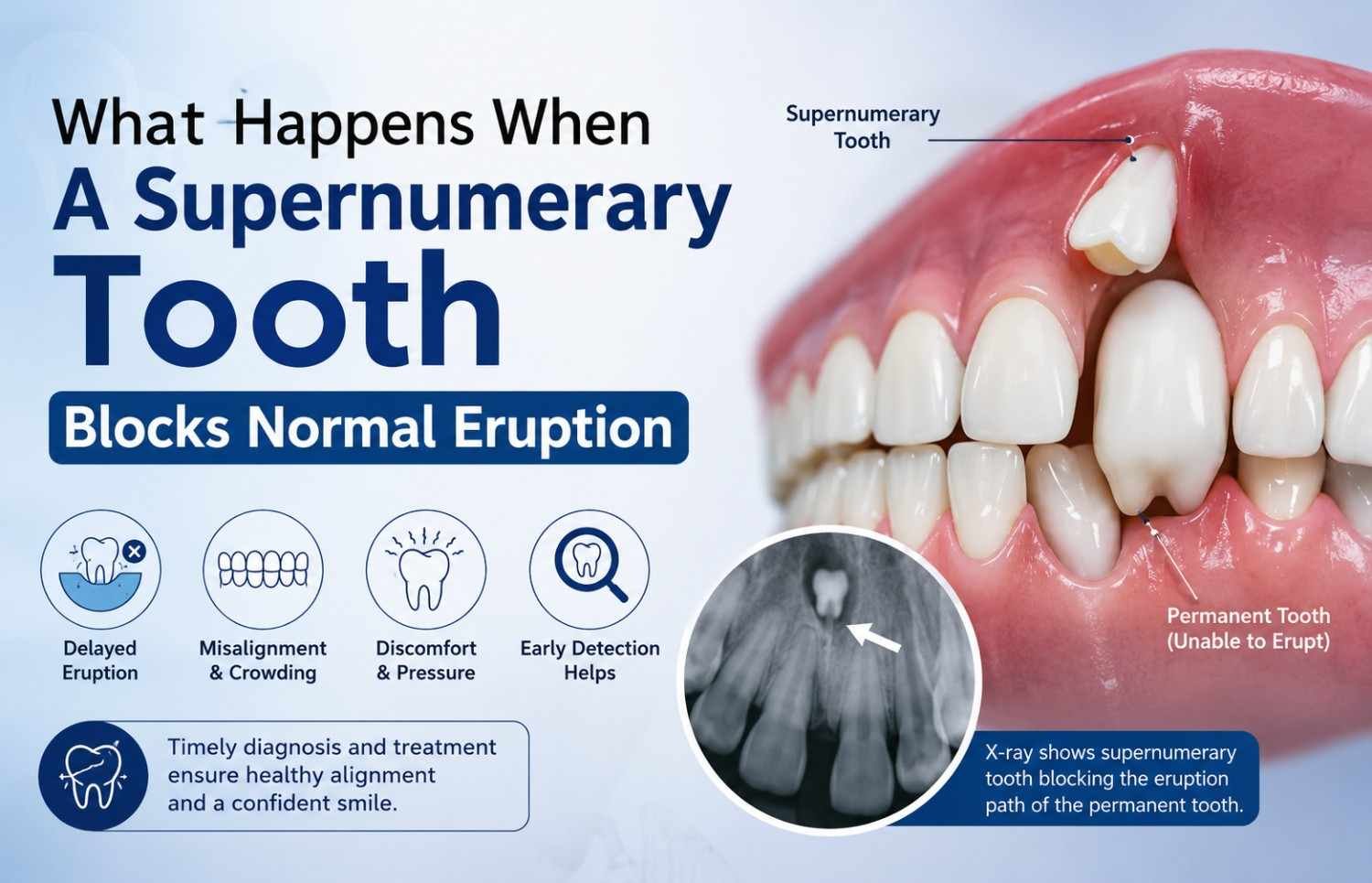
A supernumerary tooth is an extra tooth that develops beyond the normal number of teeth. When it blocks eruption, the permanent tooth can stay trapped under the gums, come in crooked, or fail to appear on time. The short version is simple. The tooth in the way usually needs close monitoring or removal, and timing matters because the longer the blockage remains, the more likely it is to affect alignment, spacing, and future treatment.
When an extra tooth blocks eruption, the problem rarely fixes itself
Parents usually notice the issue because one baby tooth stays in place too long, one permanent tooth never shows up, or a new tooth starts erupting in an odd spot. Sometimes there are no visible signs at all, and the problem only appears on dental X rays. That can be frustrating because you did not miss anything. Some blocked teeth are simply hidden.
A supernumerary tooth blocking eruption often sits near the upper front teeth, where space and appearance matter most. If the extra tooth is lodged directly in the eruption path, the permanent tooth may stay impacted. If it pushes from the side, the permanent tooth may rotate, drift, or erupt high in the gumline. What starts as “we are just waiting for that tooth to come in” can turn into crowding, delayed treatment, and more complex orthodontic work later.
Children can also feel the social part of this before adults do. If a front tooth is missing long after classmates have theirs, kids notice. They may cover their mouth when they smile, ask why their teeth look different, or avoid photos. The dental issue is physical, but the stress around it is often emotional first.
The good news is that this is a recognized developmental problem in pediatric dentistry, and there are established ways to manage it. The American Academy of Pediatric Dentistry guidance on developing dentition and occlusion supports early evaluation of eruption disturbances so the cause can be identified and treated before it creates larger problems.
Pediatric dentist evaluation focuses on location, timing, and damage already done
The next step is usually not guesswork. A pediatric dentist will look at your child’s age, which tooth is delayed, whether the baby tooth is still present, and where the extra tooth sits in relation to the permanent one. X rays help show whether the blocked tooth still has the ability to erupt on its own once the obstacle is removed.
If the permanent tooth has enough space and healthy root development, removal of the extra tooth may be followed by a period of watching and waiting. In many cases, the permanent tooth erupts naturally after the path is cleared. If it does not move, your child may need orthodontic traction, which is a way to help guide the tooth into place.
If treatment is delayed too long, the risks rise. The impacted tooth can lose eruptive force, nearby teeth can shift into the wrong space, and cysts or resorption can develop in some cases. That does not mean every extra tooth is an emergency. It means timing should be based on evidence, not hope.
National oral health data continues to show how common developmental and access related dental issues are for children, and why early diagnosis matters. The National Institute of Dental and Craniofacial Research report on oral health in America highlights the value of preventive care and timely intervention for better long term outcomes.
Blocked tooth eruption can affect more than one tooth
An impacted tooth caused by an extra tooth does not always stay a one tooth problem. If the permanent tooth is pushed off course, the neighboring teeth may drift. That can change the bite, create cleaning challenges, and increase the chance of braces later. In the front of the mouth, even a small shift can be very visible. In the back, the issue may go unnoticed longer, but it can still affect function.
This is also where families start weighing cost and treatment burden. One well timed procedure may prevent months or years of added orthodontic work. On the other hand, some children do need a staged plan that includes monitoring, removal, and alignment. A skilled pediatric dentist helps sort out which path fits the child in front of them, not just the X ray.
Treatment options depend on whether the permanent tooth can recover
| Situation | Common Approach | What Families Should Expect |
|---|---|---|
| Extra tooth present, permanent tooth delayed, good space available | Remove the supernumerary tooth and monitor eruption | The permanent tooth may erupt on its own over several months |
| Extra tooth removed, permanent tooth still impacted | Orthodontic evaluation and possible traction | Braces or an attachment may be used to guide the tooth into position |
| Permanent tooth has shifted or nearby teeth crowded the space | Removal plus orthodontic space management | Treatment may take longer because the path is no longer clear |
| Extra tooth found early with no active damage yet | Careful monitoring or planned removal based on growth stage | Timing is chosen to protect nearby roots and support normal eruption |
Three steps help you move forward with less stress
Get imaging, not guesses. If a permanent tooth is late, especially a front tooth, ask for X rays or a referral. Delayed eruption has several causes, and the treatment depends on the exact position of the extra tooth and the impacted tooth.
Ask about timing in plain language. You need to know whether your child should be watched, referred for removal, or seen by orthodontics now. Ask what happens if you wait three months, six months, or a year. That question often clarifies how urgent the situation really is.
Make a plan that includes follow up. Removal is often only one part of care. Ask how the permanent tooth will be checked afterward, how long natural eruption may take, and when orthodontic help would be considered if the tooth does not move.
Also Read: 5 Common Questions About Veterinary Clinic Services Answered
Early care gives the blocked tooth its best chance
Hearing that an extra tooth is blocking a permanent one can make everything suddenly feel complicated. It is still manageable, and in many cases, very treatable. The main thing is not to let a delayed tooth sit unexplained for too long. Early evaluation gives your child the best chance of a simpler fix, a smoother eruption pattern, and fewer surprises later.
If your child has a delayed tooth or signs of a blocked tooth eruption, schedule an evaluation with a pediatric dentist and get a clear treatment plan based on imaging and timing.


About the Author